Blooming
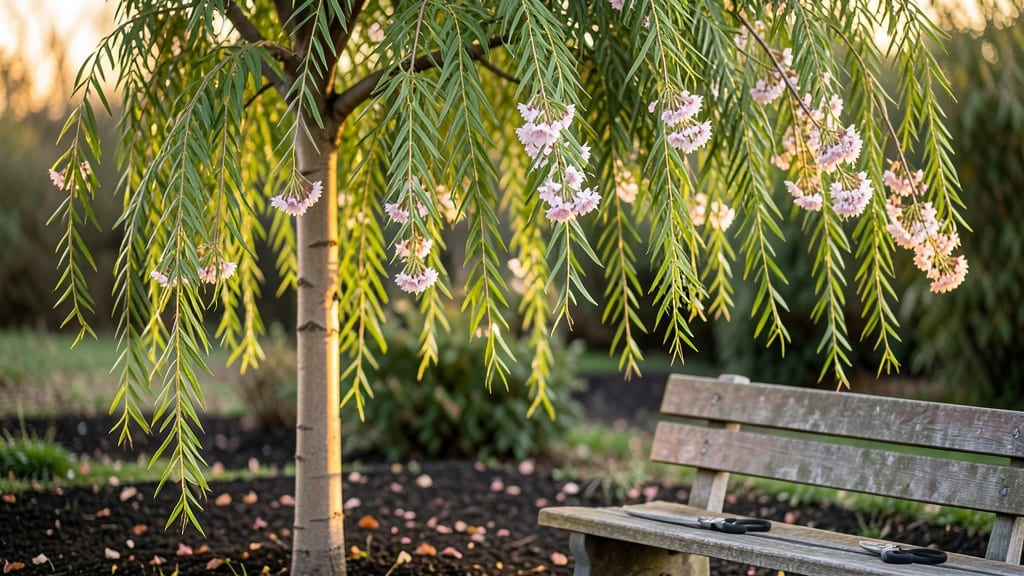
The cherry blossom willow tree transforms any Pacific Northwest garden into a dreamy, ever-changing retreat. 🌸 I planted mine near a small pond three years ago, and it’s now the star of our landscape—soft pink blooms in spring, golden foliage in fall, and graceful arching branches year-round.
This isn’t just a tree; it’s a living privacy screen that shifts with the seasons, blending elegance with effortless function.
Perfect for wet or moist soils, it thrives near water features, along fences, or as a dramatic focal point in mixed borders. Pair it with dwarf conifers for structure, ferns for lush contrast, or early bloomers like camellias to extend the seasonal show.
The key is giving it space—its roots spread wide, but the reward is a tree that feels like a natural masterpiece, not just another plant.
You’ll love how it softens hard lines in your garden while providing shade and shelter. In spring, the blossoms create a cloud of pink; in winter, the bare branches add delicate structure.
It’s the kind of tree that makes neighbors stop and ask, “What is that?”—and the answer is simple: beauty that works as hard as it grows.
Works in formal gardens, cottage-style plots, or even urban courtyards with enough room. Here’s how to make it the centerpiece of your outdoor space—without sacrificing practicality.
📚 In This Guide
- What you need
- Instructions
- Tips and common mistakes
- Wrapping up and next steps
What you need
- ● Cherry Blossom Willow Tree (Salix caprea ‘Pendula’ or similar hybrid): 1–3 bare-root or container-grown saplings (5–7 ft tall for mature height of 15–25 ft)
- ● Pro tip: 💡 Opt for disease-resistant varieties like ‘Babylon’ or ‘Golden Willow’ if your soil is heavy clay.
- ● Soil Amendments: 5–10 lbs of peat moss or coconut coir (for drainage)
- ● 1–2 lbs of compost (organic matter for nutrients)
- ● 1 cup slow-release fertilizer (10-10-10 NPK ratio)
- ● Mulch: 2–3 bags of wood chips or pine straw (3–4 inches deep)
- ● Digging Tools: 1 shovel (round-point for planting)
- ● 1 garden trowel (for delicate root handling)
- ● 1 pruning shears (sterilized, for shaping)
- ● Safety & Utility: 1 pair gloves (heavy-duty for thorns)
- ● 1 watering can or hose (with adjustable nozzle)
- ● 1 measuring tape (for spacing, 10–15 ft apart for privacy)
- ● 1 tree stake (if planting in windy areas)
- ● 1 tree guard (to protect from deer/browsing)
- ● 1 soil pH test kit (willows prefer 6.0–7.5)
- ● 1 drip irrigation system (for deep watering in dry summers)
Instructions for planting and caring for a cherry blossom willow tree
This stunning Pacific Northwest beauty thrives with the right approach—here’s how to plant and nurture it for years of seasonal interest.
🌱 Step 1: Select and Prepare the Planting Site
Cherry blossom willows (Salix alba 'Chermesina') need full sun to partial shade and well-draining soil to prevent root rot. In the Pacific Northwest’s damp climate, choose a site with at least 6 hours of direct sunlight daily, preferably near a water feature or moist soil. Avoid low-lying areas where water pools after rain.
Test your soil’s drainage by digging a 12-inch deep hole—if water lingers after 30 minutes, amend the soil with 2-3 inches of compost or sand to improve aeration. The tree’s roots are shallow but extensive, so space it 15-20 feet from structures to avoid invasive root systems damaging foundations or sidewalks.
🪴 Step 2: Plant at the Right Time and Depth
Plant your cherry blossom willow in early spring or fall, when temperatures are mild (50-70°F). Dig a hole twice as wide as the root ball but no deeper—willows resent being buried too deeply, which can suffocate roots. Gently loosen the root ball if it’s tightly bound, then place the tree in the hole so the top of the root ball sits 1-2 inches above ground level. This prevents water from pooling around the stem.
Backfill with native soil, tamping lightly to remove air pockets but avoiding compaction. Water deeply (10-15 gallons) to settle the soil and encourage root spread. Mulch with 3 inches of wood chips, keeping mulch 6 inches away from the trunk to prevent rot. Real talk: Skipping this step leads to poor establishment and weak growth.
☀️ Step 3: Water and Fertilize for Strong Establishment
Newly planted willows need consistent moisture for the first 2 growing seasons. Water 2-3 times per week during dry spells, providing 15-20 gallons per week total. You’ll know it’s enough when the soil feels moist 3-4 inches deep—let the top inch dry between waterings to prevent fungal issues. In the Pacific Northwest’s rainy climate, supplemental watering is critical during summer droughts.
Fertilize lightly in early spring with a balanced, slow-release fertilizer (10-10-10). Apply ½ cup per year of tree age (e.g., ½ cup for a 1-year-old tree, 1 cup for a 2-year-old). Avoid high-nitrogen fertilizers, which promote leafy growth at the expense of the tree’s iconic pink blossoms and sturdy structure. Over-fertilizing also attracts pests like aphids, which love the tree’s sap.
✂️ Step 4: Prune for Health and Seasonal Interest
Prune your cherry blossom willow in late winter or early spring, before new growth begins. Remove dead, diseased, or crossing branches first, cutting back to the branch collar. Thin out 10-20% of the canopy to improve airflow and reduce disease risk. This tree’s natural weeping habit means it doesn’t need heavy pruning, but you can shape it lightly to encourage a fuller, more balanced form.
Watch for suckers—vigorous shoots that sprout at the base. Remove them promptly to redirect the tree’s energy into upward growth. If the tree grows too large for its space, prune selectively in early summer after flowering, but avoid heavy cuts, which can stress the tree. Here’s the thing—willows respond well to pruning, so don’t hesitate to shape it, but avoid over-pruning, which weakens the structure.
🌿 Step 5: Maintain Year-Round for Privacy and Beauty
Cherry blossom willows offer year-round interest: pink blossoms in spring, lush green foliage in summer, golden-yellow fall color, and bark texture in winter. To keep it thriving, mulch annually in early spring, replenishing the 3-inch layer of wood chips. This conserves moisture, regulates soil temperature, and suppresses weeds—critical in the Pacific Northwest’s damp, competitive understory.
Monitor for pests like willow sawflies or aphids, which can defoliate the tree. A strong jet of water often dislodges aphids, while neem oil spray (applied in early spring) deters sawflies. If the tree shows signs of stress—yellowing leaves, stunted growth, or dieback—check for root rot (common in waterlogged soil) or canker disease (brown, oozing lesions on branches). Prune out affected areas immediately and improve drainage if needed.
Tips & tricks for perfect cherry blossom willow planting
A few key strategies will ensure your Pacific Northwest cherry blossom willow thrives for decades. These insights come from years of watching these trees transform landscapes—and avoiding common pitfalls.
Soil Drainage is Non-Negotiable: In Step 1, when testing drainage, don't just check the hole you dig—observe the surrounding area after a rainstorm. The Pacific Northwest's wet climate means even slightly heavy soil can become waterlogged. If your test hole holds water after 30 minutes, you're not done yet. Add another inch of compost or sand and retest. Remember, willow roots need oxygen as much as water—think of it as creating a sponge that drains efficiently.
Timing Matters More Than You Think: Those 6 hours of sunlight in Step 1 should be direct morning sun if possible. Early morning light helps prevent fungal issues that thrive in damp Pacific Northwest evenings. Also, plant in early spring when soil temperatures reach at least 50°F—cold soil can shock delicate roots. Pro tip: Check soil temperature with a simple thermometer before planting; willows are sensitive to temperature swings.
Mulching Technique That Actually Works: The 3 inches of wood chips in Step 2 should be applied like a donut—not touching the trunk. Many gardeners make the mistake of piling mulch right against the bark, which creates moisture traps that invite rot. Use a rake to create that 6-inch gap, then top with a thin layer of straw for extra insulation during our chilly springs. This simple adjustment can add years to your tree's life.
Watering Strategy for Pacific Northwest Conditions: Those 15-20 gallons per week in Step 3 might seem excessive, but consider this: our region's summer droughts can dry soil to 6 inches deep in just days. Water deeply but less frequently—aim for the soil to stay moist 3-4 inches down, not just at the surface. A soil moisture meter is worth the investment here. And when you water, do it in the morning to allow foliage to dry before evening dew sets in.
Pro Tips for Cherry Blossom Willow Tree
- A few key strategies will ensure your Pacific Northwest cherry blossom willow thrives for decades.
- Soil Drainage is Non-Negotiable: In Step 1, when testing drainage, don't just check the hole you dig—observe the surrounding area after a rainstorm.
- Timing Matters More Than You Think: Those 6 hours of sunlight in Step 1 should be direct morning sun if possible.
Frequently asked questions
Got questions about the stunning cherry blossom willow tree? You’re not alone! Here are some of the most common queries—plus quick answers to help you make the best choices for your Pacific Northwest garden.
How fast does a cherry blossom willow grow?
A cherry blossom willow is a fast-growing tree, often adding 5–10 feet per year under ideal conditions (moist, well-drained soil and full sun). Within 3–5 years, it can create a lush, 20-foot-tall privacy screen—perfect for quick shade and beauty! Just be mindful of its aggressive root system if planted near foundations or sidewalks.
When do cherry blossom willows bloom?
Timing varies slightly by climate, but most cherry blossom willows bloom in early spring (March–April in the PNW), just as other cherry trees do. Their delicate pink flowers create a breathtaking display for 2–3 weeks. For consistent blooms, choose a Salix integra ‘Flamingo’ cultivar, which often reblooms lightly in late summer.
Are cherry blossom willows good for privacy?
Their weeping branches and dense foliage block views beautifully, but they’re not as thick as evergreens. For year-round privacy, pair them with evergreen shrubs (like boxwood or holly) or plant them in clusters. Just note: Their branches can get heavy—prune regularly to avoid breakage in storms.
Do cherry blossom willows need a lot of water?
Yes! These trees thrive in moist, slightly acidic soil and cannot tolerate drought. Water deeply 2–3 times per week during the first year, then 1–2 times weekly in dry spells. Mulching helps retain moisture, but avoid overwatering—root rot is a risk. If your soil drains poorly, consider raising beds or amending with compost.
How do I prune a cherry blossom willow to keep it in shape?
Prune in late winter or early spring (before new growth) to shape the tree and encourage blooms. Use clean, sharp shears to cut back overlapping or dead branches by ⅓. Avoid heavy pruning in summer—it can stress the tree. For a neater look, trim the outer branches to maintain a rounded canopy. Wear gloves—willow branches can be spiky!
Are cherry blossom willows invasive?
While not as aggressive as Russian olive or English ivy, cherry blossom willows can spread via suckers (shoots from roots). To control them, remove suckers promptly or install a root barrier if planted near property lines. They’re generally well-behaved in managed gardens but may escape into wild areas if left unchecked.
Wrapping up and next steps
The cherry blossom willow tree is a stunning, low-maintenance choice for adding year-round beauty and privacy to your Pacific Northwest landscape. With its delicate pink blooms, lush foliage, and graceful arching branches, it transforms any space into a serene retreat—whether you’re a seasoned gardener or a beginner.
Ready to elevate your outdoor oasis? Start by selecting the perfect spot in your yard, gather your supplies, and plant with confidence!
🌸 Pro tip: Pair it with native companions like rhododendrons or hemlocks for a cohesive, thriving garden.