Trees
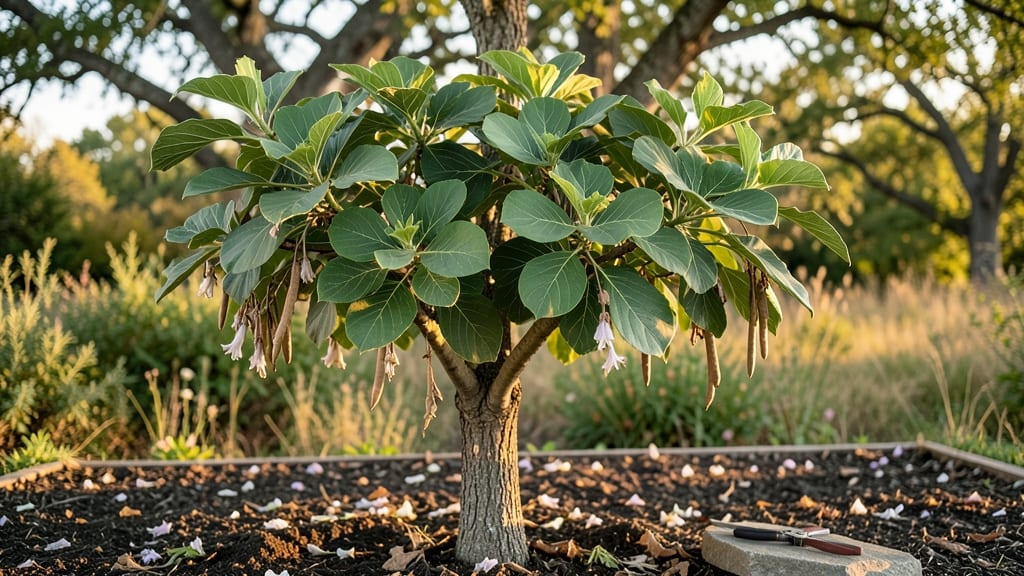
Planting a catalpa tree in the Pacific Northwest gives you a frost-resistant giant with showstopping blooms. 🌿 I've watched these trees thrive through our damp winters and windy springs, their glossy leaves and dramatic flowers becoming the centerpiece of any yard.
The key is timing—spring planting after the last frost lets roots establish before summer heat hits.
You'll need a spot with full sun and well-draining soil, though catalpas tolerate clay better than most trees. Dig a hole twice as wide as the root ball but no deeper—these trees hate having their roots buried too deep.
A 5-gallon container-grown tree is perfect for beginners, offering established roots that handle our region's unpredictable weather.
By summer's end, you'll see that signature catalpa shape taking form—tall, sturdy, and lush. The fragrant white flowers in June attract hummingbirds, while the heart-shaped leaves provide shade all season. Just be patient: full maturity takes 10-15 years, but the rewards are worth every wait.
The real secret? Pruning only to remove dead wood—catalpas handle our wet winters beautifully when left alone. A little mulch around the base helps retain moisture, and you'll rarely need to water once established. Perfect for both urban yards and rural landscapes alike.
📚 In This Guide
- What you need
- Instructions
- Tips and common mistakes
- Wrapping up and next steps
What you need
- ● Catalpa tree: 1–3 Catalpa speciosa (Northern Catalpa) or Catalpa bignonioides (Southern Catalpa) saplings (3–5 ft tall for faster growth) OR
- ● Seeds (if starting from scratch—requires stratification for ~60 days at 35–40°F).
- ● Planting site: Full sun to partial shade (6+ hours of sunlight daily).
- ● Well-draining soil (amend with compost if clay-heavy).
- ● Space: 30–50 ft apart (mature width) and 20–30 ft for height.
- ● Tools: Shovel or trowel (for digging holes).
- ● Garden fork (to loosen soil).
- ● Measuring tape (to check depth/spacing).
- ● Gloves (for protection).
- ● Watering can or hose (with adjustable nozzle).
- ○ Amendments (optional but helpful): 5–10 lbs of 5-10-5 fertilizer (balanced NPK) or compost.
- ● Mulch (3–4 inches of wood chips or straw to retain moisture).
- ● Choose Catalpa speciosa (hardier in colder microclimates like Zone 4).
- ● Plant in late spring or early fall (avoid frost-sensitive young roots).
- ● Add a 1-inch layer of mulch in winter to insulate roots.
- ● Soil test: Check pH (ideal: 6.0–7.5). Adjust with lime or sulfur if needed.
- ○ Drip irrigation: Optional but ideal for consistent moisture (especially in PNW’s dry summers).
- ● Stake young trees: Use 2–3 stakes if planting in windy areas (common in PNW!).
Step-by-step instructions for planting a catalpa tree in the Pacific Northwest
Here's my battle-tested approach for establishing a hardy catalpa that thrives through PNW winters and summers.
🌱 Step 1: Choose the Right Location and Prepare the Soil
Catalpas need space—plant your tree at least 40 feet from structures or other trees. They grow 50-70 feet tall with a wide canopy, so think long-term. The Pacific Northwest's acidic soils suit them perfectly, but if your yard has heavy clay, amend with 2-3 inches of compost mixed into the top 12 inches of soil.
Dig a hole twice as wide as the root ball but no deeper. The top of the root ball should sit 1-2 inches above ground level—this prevents water pooling around the trunk. Loosen the soil at the bottom of the hole with your shovel to encourage root spread. I always water the hole thoroughly 24 hours before planting to help settle the soil naturally.
🪴 Step 2: Plant at the Right Time and Handle the Root Ball Carefully
Spring is ideal for planting catalpas in the PNW—aim for late April to early May after the last frost but before summer heat arrives. If you must plant in fall, do it 6-8 weeks before first frost to allow roots to establish. Remove the tree from its container and gently tease apart any circling roots with your fingers—never use a knife, as you'll damage the root tissue.
Place the tree in the hole so it stands straight, then backfill with native soil (no amendments) while someone else holds the tree upright. Tamp down the soil in 2-inch layers with your foot to eliminate air pockets. Water deeply as you fill, then create a 3-foot diameter watering basin around the base to direct irrigation.
☀️ Step 3: Water Deeply and Mulch for Winter Protection
Water your newly planted catalpa every 5-7 days for the first 2 months, providing 1-2 gallons per watering to encourage deep root growth. The soil should be moist 6-8 inches down—use a trowel to check. In the PNW's wet climate, you'll reduce watering after establishment, but young trees need consistent moisture to fight off transplant shock.
Apply 3-4 inches of wood chips or bark mulch in the watering basin, keeping it 6 inches away from the trunk to prevent rot. This mulch layer protects roots from winter freeze-thaw cycles and summer heat. I always top up mulch in late winter before rains begin—this gives roots a head start on spring growth.
✂️ Step 4: Prune for Structure and Disease Prevention
Wait until late winter or early spring before your tree breaks dormancy to prune. Remove any dead, diseased, or crossing branches first using clean, sharp pruners. Catalpas are prone to verticillium wilt, so never leave stubs—cut branches just outside the branch collar where it meets the trunk. Thin out the canopy to improve airflow, aiming for 20-30% reduction in branch density.
Young catalpas benefit from structural pruning to encourage a strong central leader. Remove competing leaders early to avoid a weak, multi-trunked tree. I always sterilize my pruners with rubbing alcohol between cuts to prevent bacterial spread. Avoid heavy pruning in fall—new growth won't harden off before winter in the PNW's damp climate.
⏰ Step 5: Monitor and Maintain Through Seasons
Check your catalpa's soil moisture monthly after establishment by inserting a 6-inch screwdriver into the ground—if it goes in easily, roots have enough water. Fertilize only if leaves show signs of deficiency: apply ½ cup of 10-10-10 fertilizer in early spring, working it into the soil surface. Never fertilize in fall—new growth won't survive winter.
Watch for catalpa sphinx moth caterpillars—they'll defoliate your tree in summer. While unsightly, they're harmless and won't kill the tree. If you prefer, handpick them when they're small. Mature catalpas develop thick bark that's naturally resistant to fire and pests, making them low-maintenance once established. With proper planting, your tree should thrive for 50+ years in PNW conditions.
Tips & tricks for planting a catalpa tree in the Pacific Northwest
Here's what I've learned from years of planting catalpas that thrive in our wet, mild winters and hot summers.
Soil Prep Secret: The 24-hour pre-watering of the planting hole is more important than you might think. This step helps settle the soil naturally and prevents compaction when you plant. I've found that adding a handful of mycorrhizal fungi to the bottom of the hole can also give your catalpa's roots a helpful boost, especially in our acidic PNW soils. This optional step creates a symbiotic relationship that helps roots absorb nutrients more efficiently.
Root Ball Handling: When teasing apart circling roots in Step 2, work gently but firmly—you're not trying to cut them, just encourage them to spread outward. I use my fingers to gently separate the roots in a downward motion, almost like combing through hair. This prevents damage while encouraging outward growth. If you notice any broken roots, just trim them cleanly with pruners and they'll still establish fine.
Watering Wisdom: Those first two months of watering every 5-7 days are critical for establishing deep roots. I like to use a soaker hose for this because it delivers water slowly at the base where the roots are growing, rather than creating surface runoff. The goal is to keep that soil moist 6-8 inches down—think of it as giving your tree's roots a drink that lasts. In our rainy climate, you might need to adjust this schedule based on how much natural rainfall you're getting.
Pruning Pro Tip: When pruning in late winter, look for branches that are growing inward or crossing each other—these are prime candidates for removal. I always make my cuts just outside the branch collar where it meets the trunk, and I never leave stubs. This helps prevent disease entry points. For young trees, I aim to create an open center that allows sunlight and air to circulate through the canopy, which reduces the risk of fungal issues like verticillium wilt that catalpas are susceptible to.
Pro Tips for Catalpa Tree
- Here's what I've learned from years of planting catalpas that thrive in our wet, mild winters and hot summers.
- Soil Prep Secret: The 24-hour pre-watering of the planting hole is more important than you might think.
- Root Ball Handling: When teasing apart circling roots in Step 2, work gently but firmly—you're not trying to cut them, just encourage them to spread outward.
Frequently asked questions
Got questions about growing and caring for your catalpa tree in the Pacific Northwest? Here are some of the most common ones—and their answers! Whether you're troubleshooting issues or planning ahead, this FAQ will help you keep your tree thriving.
When is the best time to plant a catalpa tree in the PNW?
The ideal time to plant a catalpa tree in the Pacific Northwest is during early spring (March-May) or early fall (September-October). This gives the roots time to establish before summer heat or winter frost sets in. Avoid planting in late fall or winter, as cold soil can stunt root growth.
How fast does a catalpa tree grow, and how tall will it get?
Catalpa trees are fast-growing, adding 12-24 inches per year under ideal conditions. Mature trees typically reach 20-30 feet tall, though some varieties can grow up to 40 feet. In the PNW, growth may slow slightly in cooler, wetter climates, but they still thrive with proper care.
Is the catalpa tree truly frost-resistant in the PNW?
Yes! Catalpa trees are hardy to USDA Zones 4-9, making them well-suited for the Pacific Northwest’s frost. However, young trees may need winter mulch (2-3 inches of wood chips) to protect roots during harsh freezes. Older trees handle frost beautifully and often bloom spectacularly after winter.
Why are there holes in my catalpa tree leaves, and how do I fix it?
Those holes? Likely catalpa sphinx moth caterpillars (harmless but pesky!). While they don’t kill the tree, heavy infestations can defoliate it. Handpick caterpillars or use neem oil as a natural deterrent. Avoid pesticides—the moths play a key role in pollination!
Can I grow a catalpa tree in a container, or does it need to be planted in the ground?
Catalpa trees prefer ground planting due to their size, but young trees (up to 3 years old) can thrive in large containers (15+ gallons) with well-draining soil. Use a fast-draining mix and repot every 2-3 years. Just know: They’ll outgrow containers quickly!
Pro Tip:
Need extra help? Monitor soil moisture—catalpas hate soggy roots. If your PNW winters are extra wet, consider raising the soil level slightly or improving drainage to keep your tree happy and healthy.
Wrapping up and next steps
The catalpa tree is a stunning, frost-resistant addition to your Pacific Northwest landscape—easy to grow, low-maintenance, and packed with beauty! With the right soil, sunlight, and care, you’ll enjoy its vibrant blooms and lush foliage for decades.
Whether you’re a seasoned gardener or a beginner, this tree rewards patience with effortless elegance.
Ready to plant your own catalpa? Start by checking your local nursery for young saplings, then mark your calendar for early spring planting. Your future shade tree is just a shovel’s throw away! 🌱