Pruning
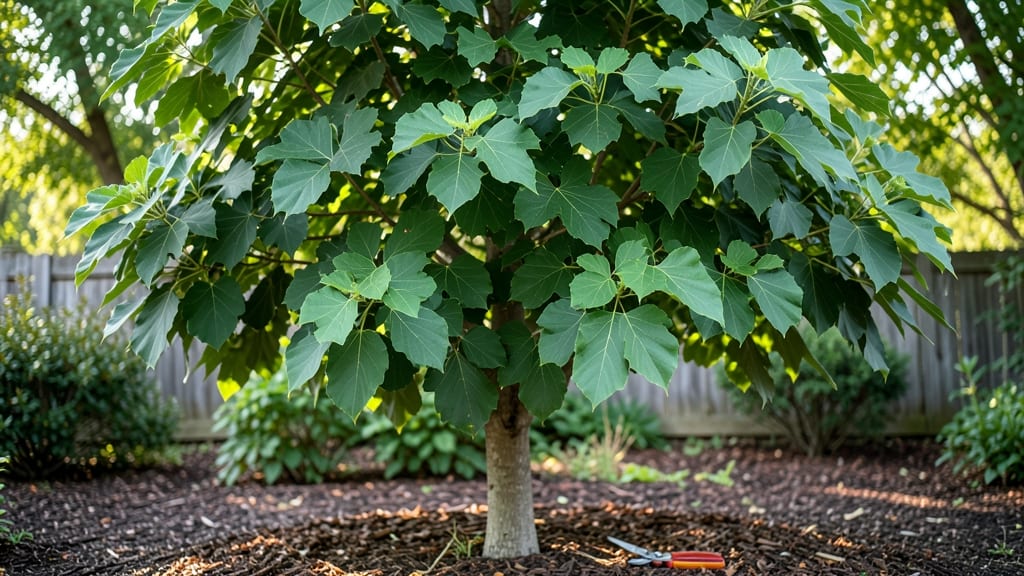
That heart-shaped catalpa leaf could be your tree's pride—or a toxic imposter's disguise. 🌿 I've spent years untangling catalpa lookalikes, and the differences matter when diagnosing problems like leaf spots or caterpillar damage.
The real catalpa's broad, velvety leaves have those distinctive parallel veins and a slightly fuzzy texture, while poisonous lookalikes like black cherry or water ash have sharper edges and glossier surfaces.
The stakes get higher when pests enter the picture. Catalpa worms—those giant green caterpillars—only target true catalpas, but their damage (skeletonized leaves) can mimic fungal issues. Yellowing leaves?
Often a sign of overwatering or nutrient deficiencies, not disease. The key is matching symptoms to the leaf shape, vein pattern, and growth habit before reaching for treatments.
You'll walk away knowing how to spot true catalpa leaves, recognize early signs of trouble, and choose the right response—whether that's organic sprays for caterpillars or adjusting your watering schedule. The goal isn't just saving leaves, but keeping your tree thriving for decades.
Works for backyard trees, park specimens, or even container-grown catalpas. Let's get those leaves talking to you instead of screaming for help.
📚 In This Guide
- What you need
- Instructions
- Tips and common mistakes
- Wrapping up and next steps
What you need
- ● Fresh or dried catalpa leaves: Collect 3–5 healthy leaves from a suspected catalpa tree (or a known one for comparison). Ensure they’re free of pests or disease.
- ● Magnifying glass (5x–10x zoom): Essential for inspecting leaf details like vein patterns, edge serrations, and surface texture.
- ● Field guide or smartphone: A printed or digital guide to Catalpa species (e.g., Catalpa bignonioides or Catalpa speciosa) for side-by-side comparison.
- ● Notebook and pen: To jot down observations like leaf shape, size (measure with a ruler!), and color variations.
- ● Ruler or measuring tape: Catalpa leaves are large—typically 6–12 inches long—so precise measurements help rule out lookalikes.
- ○ Pruning shears (sterilized): For safely harvesting leaves from trees (optional if leaves are already on the ground).
- ● Camera or phone: Snap photos of the leaf’s top and bottom sides, as well as the stem attachment, for later reference.
- ● White sheet of paper: Lay leaves on it to check for translucent vein patterns (a key catalpa trait!).
- ● Toxic plant database app: Apps like PictureThis or iNaturalist can cross-reference your findings with known toxic lookalikes (e.g., Oleander or Lantana).
- ● Glove: Wear one if handling leaves from unknown plants to avoid skin irritation.
- ● Herbarium press: For preserving leaves long-term if you’re building a plant ID library.
How to identify catalpa leaves and avoid toxic lookalikes
Here's my foolproof method for telling catalpa leaves apart from dangerous imposters.
🌿 Step 1: Examine Leaf Shape and Arrangement
Catalpa leaves are distinctive with their heart-shaped base that tapers into a pointed tip, resembling a fiddlehead. They grow in whorled clusters (usually 3-5 leaves at each node) along the stem, not alternating like many other trees. Measure a mature leaf—catalpa leaves typically reach 6-12 inches long with prominent veins that create a fan-like pattern.
Run your fingers along the leaf edge—catalpa leaves have slightly wavy margins that aren't sharply serrated. This subtle wave helps distinguish them from poisonous lookalikes like black cherry, whose leaves have fine, sharp teeth. I always check this first because it's the most reliable visual clue.
🌱 Step 2: Inspect the Leaf Surface and Underside
Flip the leaf over and look for soft, downy hairs on the underside—this fuzzy texture is a dead giveaway for catalpa. The top side is smooth but has a slightly leathery texture when rubbed between fingers. Catalpa leaves also have prominent secondary veins that create a network pattern visible through the leaf.
Here's the thing—many toxic trees have smooth leaves, but catalpa's fuzzy underside is unique. I keep a magnifying glass handy because some lookalikes might have faint hairs, but catalpa's are dense enough to feel velvety. Pay special attention to young leaves, which are more hairy than mature ones.
☀️ Step 3: Check for Catalpa's Signature Seed Pods
While not leaves, catalpa's bean-like seed pods (up to 12-20 inches long) are another key identifier. These elongated, brown pods split open in fall to reveal flat, winged seeds. If you see these near your tree, you can be confident it's a catalpa—no other common lookalike produces similar pods.
I always check for these pods in late summer because they're a foolproof way to confirm identification. Even if the leaves are similar, the pods eliminate any doubt. Remember that catalpa trees also produce large, fragrant white flowers in spring, another distinguishing feature.
✂️ Step 4: Compare with Common Toxic Lookalikes
Black cherry leaves are the most common imposter—both have similar heart shapes but cherry leaves are shorter (3-6 inches), have fine serrated edges, and grow alternately along the stem. Another dangerous lookalike is the water hemlock, which has deeply lobed leaves that resemble catalpa's shape but with jagged edges.
I keep a reference chart handy with photos of catalpa leaves alongside black cherry, water hemlock, and other toxic species. When in doubt, I snap a photo and compare it to my reference. Never rely on leaf shape alone—always check the arrangement, surface texture, and overall tree structure.
🪴 Step 5: Verify with Bark and Tree Structure
Catalpa bark is deeply furrowed with interlocking ridges that create a distinctive pattern. Young catalpa trees have smooth gray bark that develops these characteristic grooves as they mature. The tree's upright, vase-like shape with a rounded crown is another clue—most toxic lookalikes have different growth habits.
I always examine the bark because it's often overlooked. If you're near a young catalpa, the bark might still be smooth, but the leaf arrangement and texture will still give it away. This step is especially important if you're identifying a tree in winter when leaves aren't present.
Tips & tricks for perfect catalpa leaf identification
A few key tricks will help you confidently distinguish catalpa leaves from toxic lookalikes every time.
Seasonal Variation: In Step 1, remember that young catalpa leaves (spring/summer) are more hairy than mature ones (late summer/fall). The fuzzy texture becomes less pronounced as leaves age, so examine both young and mature leaves when possible. This seasonal change is why I always check undersides first—the hairs are most visible on newer growth.
Leaf Arrangement: When comparing with lookalikes in Step 4, focus on the whorled clusters (3-5 leaves per node) mentioned in Step 1. This arrangement is unique to catalpa—most toxic trees have alternating leaves. I've seen gardeners overlook this because they focus only on shape, but the arrangement is often the most reliable clue.
Reference Tools: For Step 4's comparison with toxic lookalikes, create a simple reference guide using clear plastic sleeves. Place photos of catalpa leaves alongside black cherry and water hemlock samples. I keep mine in my gardening notebook—it's saved me from misidentification multiple times. The visual comparison helps spot subtle differences like vein patterns or edge textures.
Winter Identification: In Step 5, when identifying bark in winter, look for the characteristic interlocking ridges. Young catalpa bark may still be smooth, but the tree's overall vase-like shape is a strong indicator. I've used this method to confirm catalpa trees in my neighborhood during winter walks—it's surprisingly reliable once you know what to look for.
Pro Tips for Catalpa Tree Leaf
- A few key tricks will help you confidently distinguish catalpa leaves from toxic lookalikes every time.
- Seasonal Variation: In Step 1, remember that young catalpa leaves (spring/summer) are more hairy than mature ones (late summer/fall).
- Leaf Arrangement: When comparing with lookalikes in Step 4, focus on the whorled clusters (3-5 leaves per node) mentioned in Step 1.
Frequently asked questions
Got questions about catalpa tree leaves—especially when it comes to spotting toxic lookalikes? Here are answers to the most common queries from gardeners just like you!
How can I tell if a catalpa leaf is toxic to my pets or livestock?
The catalpa tree (Catalpa spp.) is generally non-toxic to pets and livestock, but its seeds and bark contain catalposide, which can cause mild stomach upset if ingested in large amounts. Look for heart-shaped leaves with wavy edges—if you spot these, rest easy! For confirmation, snap a photo and compare it to trusted sources like the ASPCA’s toxic plant database.
When is the best time to prune catalpa trees to avoid leaf issues?
Prune your catalpa in late winter or early spring (before new growth starts) to minimize stress and disease risk. Avoid pruning in fall, as this can encourage fungal infections like anthracnose, which turns leaves yellow or brown. Never prune during wet weather—wait for dry, calm days for the cleanest cuts!
Are catalpa leaves similar to other toxic trees like black walnut or horse chestnut?
Not quite! Catalpa leaves are heart-shaped with serrated edges, while black walnut leaves are compound (7–23 leaflets) and horse chestnut leaves are palmate (5–7 leaflets). Toxic lookalikes like black cherry have smooth, oval leaves with pointed tips. When in doubt, check the bark, buds, and fruit—catalpa trees have long, bean-like seed pods!
Why are my catalpa leaves turning yellow or brown? Is it a disease or pest problem?
Yellowing or browning catalpa leaves could signal nutrient deficiency (like iron or nitrogen), fungal diseases (e.g., powdery mildew), or pests like catalpa worms. Start by checking the soil pH (ideal: 6.0–7.5) and fertilize with a balanced formula. If pests are the issue, handpick catalpa sphinx moth caterpillars (they’re harmless but messy!) or use neem oil for fungal control.
Can I use catalpa leaves for mulch or compost? Are they safe?
Yes! Catalpa leaves are safe for mulch and compost—they break down quickly and add organic matter to the soil. However, avoid using diseased leaves (like those with powdery mildew) to prevent spreading pathogens. For mulch, chop leaves finely and mix them into garden beds. Pro tip: Catalpa leaves also make great tea for compost—steep a handful in water for 24 hours, then use the nutrient-rich liquid to feed plants!
Wrapping up and next steps
Mastering catalpa tree leaf identification is a game-changer for gardeners—helping you avoid toxic lookalikes like black walnut or sycamore with confidence! 🌿 With the right tools and knowledge, you’ll prune like a pro while keeping your yard safe and thriving. Ready to put your skills to the test?
Your next step? Grab your pruners, head outdoors, and inspect those leaves firsthand. If you’re still unsure, snap a photo and compare it to your trusted guide—because the more you practice, the sharper your eye becomes! 🌟