Trees
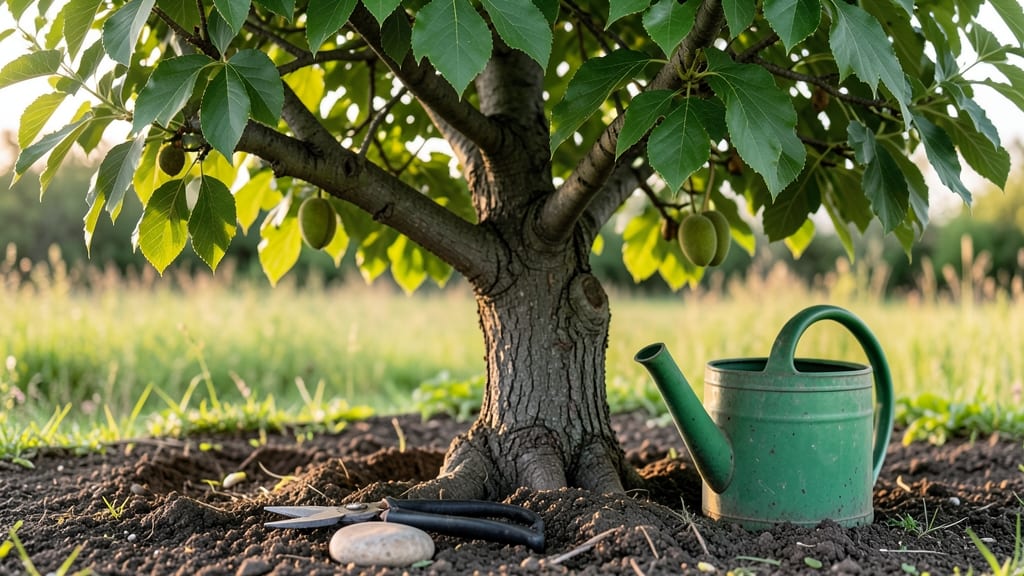
Caring for walnut trees means investing in a tree that rewards patience with rich harvests and striking shade—if you avoid the common pitfalls.
I learned the hard way that walnuts demand specific care, from soil prep to pest vigilance, but once you nail the basics, they become the sturdiest, most productive trees in your yard.
The key is understanding their quirks: they hate competition, need deep watering, and require strategic pruning to prevent disease. My first walnut tree nearly failed because I treated it like an oak, but after adjusting my approach, it’s now the star of my orchard with 20-pound nut crops every fall.
Start with well-draining soil—walnuts despise soggy roots—and plant them where they won’t be crowded by other trees or shrubs. They need full sun and 6-8 feet of space between roots and any structures to prevent girdling.
Water deeply once a week during the first two years, then taper to monthly soakings once established. Pruning isn’t just about shaping; it’s about removing dead wood and suckers in late winter to keep the tree strong and productive. The real game-changer?
A mulch ring to lock in moisture and block weeds—my trees now thrive where others struggle.
Pests like codling moths and walnut husk fly can turn a promising harvest into a disappointment, but a neem oil spray in early summer keeps them at bay. Watch for black walnut toxicity too—its roots release juglone, which stunts nearby plants like tomatoes and potatoes.
With the right care, your tree will reward you with thick, glossy leaves by midsummer and heavy nut clusters by October. The secret isn’t complicated: consistency in water, vigilance against pests, and pruning with purpose.
This approach works for both black walnuts and English walnuts, though black walnuts are hardier in colder climates. Whether you’re planting a sapling or tending a mature tree, the principles stay the same.
The payoff? A tree that outlives you—and feeds your family for decades. Let’s get those branches trimmed and those roots nourished.
📚 In This Guide
- What you need
- Instructions
- Tips and common mistakes
- Wrapping up and next steps
What you need
- ● Pruning shears: Bypass pruners (sharp, 6-8" blades) for small branches.
- ● Loppers: 10-12" bypass loppers for medium branches (2-4" diameter).
- ● Pruning saw: Curved-tooth saw for thick branches (4"+ diameter).
- ● Gloves: Heavy-duty, cut-resistant gloves (leather or synthetic).
- ● Disinfectant: 70% isopropyl alcohol or 10% bleach solution (for tool sterilization).
- ○ Pruning sealant: Optional but helpful for large cuts (e.g., Tanglefoot or Pruning Wax).
- ● Pest control: Hose with nozzle (for water blasting pests like aphids).
- ● Neem oil (1-2% concentration) or insecticidal soap (for organic pest management).
- ● Sticky traps (yellow or blue) for monitoring codling moths/wasps.
- ● Mulch: Wood chips or straw (2-4" layer, keep 6" away from trunk).
- ● Drip irrigation or hose: For consistent watering (especially during drought).
- ● Tree wrap: Protect young trunks from sunscald and pests (remove after 1-2 years).
- ● Soil tester kit: Check pH/nutrient levels (ideal: pH 6.0-7.5 for walnuts).
- ● Fertilizer: Balanced 10-10-10 or slow-release organic fertilizer (spring/fall).
- ● Bird netting: Protect nuts from squirrels/raccoons (if harvesting).
- ● Camera or journal: Track growth, pruning cuts, and pest activity over time!
Year-round care routine for healthy walnut trees
Walnut trees reward patience with abundant harvests—here’s how to keep them thriving through every season.
🌱 Step 1: Spring Pruning for Airflow and Structure
Begin pruning in late winter or early spring, just as buds swell but before new growth starts. Remove dead, diseased, or crossing branches first—they’re the easiest to spot and most critical to eliminate. Use clean, sharp pruners to make cuts at a 45-degree angle just outside the branch collar, where the branch meets the trunk. This prevents water from pooling and causing rot.
Next, thin the canopy by removing 10-20% of the smallest branches to improve light penetration and air circulation. Focus on branches growing inward or upward—these compete with stronger limbs and create dense shade that invites fungal diseases. Leave 3-4 main scaffold branches evenly spaced along the trunk for a balanced structure. You’ll see new, vibrant shoots emerging within weeks as the tree directs energy to healthier growth.
☀️ Step 2: Summer Pest and Disease Monitoring
Walnut trees face two major threats in summer: codling moths and walnut blight. Start by inspecting the undersides of leaves and new shoots for signs of black, oily spots or sawdust-like frass (insect droppings). If you spot these, apply neem oil or horticultural oil as a preventive spray, focusing on the upper and lower leaf surfaces and fruit clusters. Reapply every 10-14 days during peak pest season, typically June through August.
For walnut blight, remove and destroy any infected leaves or fruit immediately—don’t compost them. Prune out blighted cankers (sunken, discolored areas on branches) with a sterilized pruner, then seal the wound with pruning paint to prevent further infection. Mulch the base of the tree with 3-4 inches of organic mulch to retain moisture and suppress weeds, but keep it 6 inches away from the trunk to avoid rot.
✂️ Step 3: Fall Cleanup and Root Zone Maintenance
After leaves drop in late fall, rake up and discard all fallen leaves—they can harbor walnut anthracnose and other pathogens over winter. Prune any dead or weak branches one last time, but avoid heavy pruning now, as it stimulates new growth that won’t harden off before frost. Instead, focus on structural adjustments to prevent storm damage during winter storms.
Check the root zone for girdling roots (roots circling the trunk) or compaction. Loosen soil 12-18 inches deep around the drip line (the edge of the tree’s canopy) with a garden fork to encourage deeper root growth. If your soil is clay-heavy, amend it with compost to improve drainage. Water deeply once a month if rainfall is scarce, but reduce frequency as temperatures drop below 50°F to prevent winter root rot.
⏰ Step 4: Winter Protection for Young and Mature Trees
Young walnut trees (under 5 years old) need extra care in winter. Wrap the trunk with tree guard or burlap to protect it from rodent gnawing and sun scald (cracking caused by rapid temperature swings). For mature trees, avoid heavy mulching—a 2-3 inch layer is enough to insulate roots without smothering them. If your region experiences sub-zero temperatures, consider wrapping the lower trunk with insulating foam for added protection.
Monitor for walnut twig beetles, which thrive in cold climates. Look for D-shaped exit holes in small branches—these beetles transmit thousand cankers disease, which is fatal. If detected, prune and burn or chip infected wood immediately. Avoid fertilizing in winter, as new growth is vulnerable to frost damage. Instead, plan your spring feeding for early March, when soil temperatures reach 50°F.
Tips & tricks for perfect walnut tree care
A few key insights will help you avoid common pitfalls and maximize your walnut tree's potential throughout the year.
Pruning Precision: When thinning the canopy in Step 1, focus on removing branches that grow at angles less than 45 degrees from the trunk—these are the weakest points and most likely to break during storms. I learned this the hard way after losing a major branch during a summer thunderstorm. Use a pruning saw for branches thicker than 2 inches to avoid tearing the bark. Always make your cuts just outside the branch collar to promote faster healing and prevent disease entry points.
Pest Prevention Strategy: In Step 2, the 10-14 day reapplication schedule for neem oil is critical during peak pest season (June-August). I've found that applying it in the early morning when humidity is high gives the oil better coverage and longer-lasting protection. For severe infestations, consider adding kaolin clay as a physical barrier that pests avoid—it works particularly well against codling moths while being completely safe for the tree.
Root Zone Maintenance: The 12-18 inch deep soil loosening in Step 3 creates the perfect environment for root growth, but don't overdo it. I recommend using a garden fork rather than a shovel to avoid damaging larger roots. If your soil is particularly compacted, consider adding perlite or coarse sand to improve drainage while maintaining the organic matter. This is especially important for walnut trees, which have deep taproots that need well-aerated soil.
Winter Protection: For young trees in Step 4, the 50°F soil temperature threshold for spring feeding is a good rule of thumb, but I've found that checking soil temperature with a soil thermometer gives more accurate results than just watching the calendar. If you're in a region with sub-zero temperatures, consider adding a layer of straw mulch around the base of mature trees for extra insulation—just be sure to keep it away from the trunk to prevent rot.
Pro Tips for Caring For Walnut Trees
- A few key insights will help you avoid common pitfalls and maximize your walnut tree's potential throughout the year.
- Pruning Precision: When thinning the canopy in Step 1, focus on removing branches that grow at angles less than 45 degrees from the trunk—these are the weakest points and most likely to break during storms.
- Pest Prevention Strategy: In Step 2, the 10-14 day reapplication schedule for neem oil is critical during peak pest season (June-August).
Frequently asked questions
Got questions about nurturing your walnut trees? You’re not alone! Here are some of the most common concerns—plus quick, actionable answers to keep your trees thriving.
When is the best time to prune walnut trees?
The ideal time to prune is late winter or early spring (before buds swell) to avoid spreading fungal diseases. Avoid pruning in fall—it can stress the tree and leave it vulnerable to pests. Light pruning for safety can be done in summer, but major cuts should wait for dormancy.
How do I protect walnut trees from pests like codling moths or walnut husk flies?
Start with preventive measures: Remove fallen leaves/nuts, use husk fly traps (for husk flies), and apply organic sprays like neem oil or kaolin clay in early spring. For codling moths, pheromone traps and organic insecticides (like spinosad) work well. Monitor trees weekly during peak seasons.
How long does it take for a walnut tree to bear fruit?
Patience is key! Most walnut trees take 5–7 years to produce nuts, though some dwarf varieties may fruit in 3–4 years. Young trees focus on root and canopy growth—avoid heavy pruning or over-fertilizing, as it can delay fruiting. Healthy soil and consistent care speed up the process.
Why are my walnut tree leaves turning yellow or brown?
Yellowing leaves often signal nutrient deficiencies (like iron or zinc) or overwatering. Brown edges or spots? Check for pests (aphids, mites) or fungal issues (e.g., anthracnose). Test soil pH (ideal: 6.0–7.5) and adjust with compost or sulfur. Prune affected branches to improve airflow and reduce moisture buildup.
Can I grow walnut trees in containers, or do they need ground planting?
While possible, walnut trees thrive best in the ground due to their deep root systems and size (some reach 50+ feet!). If container-grown, use a large pot (30+ gallons), well-draining soil, and repot every 2–3 years. Dwarf varieties (like ‘Paradox’) adapt better but still need full sun and regular pruning to manage growth.
Wrapping up and next steps
Caring for walnut trees is all about patience, consistency, and a little know-how—just like nurturing any other prized part of your garden! 🌱 By mastering year-round pruning and pest-proofing, you’ll enjoy a thriving tree that rewards you with delicious nuts for years to come.
Start small, stay observant, and don’t hesitate to seek expert advice when needed.
Ready to take the next step? Grab your pruning shears and inspect your tree today! Whether you’re trimming branches, monitoring for pests, or simply admiring your hard work, every effort brings you closer to a bountiful harvest. Happy gardening!