
Blooming
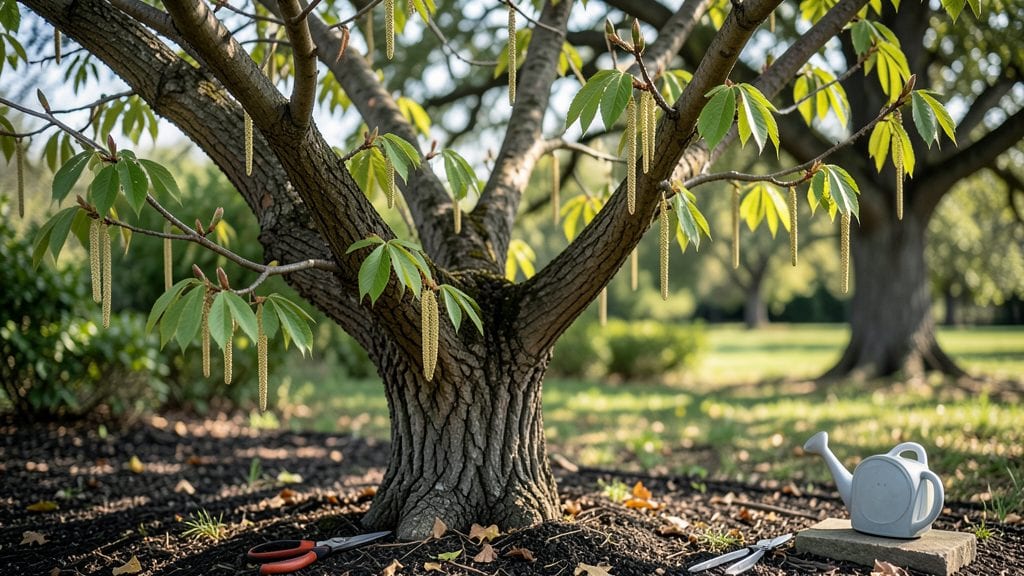
The black walnut tree bloom arrives like a whisper from the forest floor—catkins in early spring that few notice until they become the foundation for next year’s nuts. 🌿 In the Pacific Northwest, where frosts linger into May, these trees prove resilient, their flowers emerging when most gardeners are still shivering.
I’ve watched mine push through damp soil in March, their delicate clusters signaling the slow transformation into towering shade providers.
What makes black walnut blooms special is their quiet efficiency. Male flowers release pollen that fertilizes female flowers on separate trees, creating the nuts we all know—but the magic happens in how they adapt to cool climates.
Unlike many trees, black walnuts don’t demand perfect spring weather; they bloom early, when soil is still chilly, and thrive in partial shade or full sun.
The key is patience: these trees take years to mature, but their frost resistance makes them a low-maintenance choice for gardeners who value hardiness over showy displays.
By late spring, those unassuming catkins give way to leafy canopies that cast deep shade by summer. You’ll know blooming was successful when you spot tiny green husks forming in late June—each one a promise of next fall’s harvest.
The trade-off? Juglone production means they suppress nearby plants, but with proper spacing, their benefits far outweigh the drawbacks. This is a tree that rewards long-term thinking, not instant gratification.
If you’re managing existing black walnuts, focus on mulching young trees and avoiding overwatering—these blooms set the stage for decades of growth. For gardeners dreaming of planting, now’s the time to scout for young specimens, as mature trees are rarely sold bare-root.
The Pacific Northwest’s climate actually favors them, so don’t let their slow start fool you: these trees are built to last.
📚 In This Guide
- What you need
- Instructions
- Tips and common mistakes
- Wrapping up and next steps
What you need
- ● Black walnut tree sapling: Choose a Juglans nigra variety (frost-resistant, ideally 1–3 years old). Quantity: 1 (or more for landscaping).
- ● Shovel: Heavy-duty, 18–24" for digging planting holes.
- ● Pruning shears: Sharp, bypass-style (for shaping and post-bloom maintenance).
- ● Garden gloves: Heavy-duty, chemical-resistant (black walnut contains juglone, a natural herbicide).
- ● Mulch: 2–3 inches of organic mulch (wood chips or straw) to retain moisture.
- ● Watering can or hose: With a gentle spray nozzle (1–2 gallons per watering for saplings).
- ● Soil test kit: To check pH (ideal: 6.0–7.0) and nutrient levels.
- ● Fertilizer: Slow-release, balanced (e.g., 10-10-10) or compost (1–2 lbs per tree).
- ● Tree stake: 1–2 (for young trees in windy areas).
- ● Tree tie: Soft fabric straps to secure stakes.
- ● Drip irrigation system: For consistent moisture (especially in drought-prone zones).
- ● Jugone-resistant plants: Pre-planted companions (e.g., sunflowers, black-eyed Susans) to avoid allelopathic stress.
- ○ Pruning sealant: (Optional) For larger cuts to prevent disease.
How to encourage black walnut tree blooms in the Pacific Northwest
Here's how to coax vibrant blooms from your black walnut—even through our region's unpredictable frosts.
🌱 Step 1: Plant in the Right Location for Frost Resistance
Black walnuts thrive in full sun with at least 6 hours of direct light daily, but the Pacific Northwest's frosts demand extra care. Choose a site with shelter from cold winds—near a building or dense hedge works well. The tree's deep roots need well-draining soil to avoid winter rot, so avoid low spots where water pools.
I always test drainage first by digging a 12-inch deep hole and filling it with water. If it drains in under 30 minutes, the site's good. Amend heavy clay with 3 inches of compost mixed into the top 12 inches of soil to improve aeration. Black walnuts hate soggy feet, especially when frosts hit.
☀️ Step 2: Provide Consistent Light and Water Through Growing Season
Once established, black walnuts tolerate drought, but young trees need deep watering every 10-14 days during dry spells. Water at the drip line (where the branches end) to encourage root spread. I use a soaker hose for 1-2 hours to saturate the soil 12 inches deep—you'll know it's right when water appears at the edges of the hole you dug earlier.
Blooms appear on new growth, so avoid pruning in late summer. Instead, prune in early spring before buds swell. Remove any dead or crossing branches to improve air circulation, which reduces frost damage to emerging flowers. The goal is to create an open canopy that lets sunlight penetrate to lower branches where blooms form.
⏰ Step 3: Time Fertilization for Spring Bloom Support
Black walnuts benefit from balanced fertilization in early spring when buds begin to swell. Use a 10-10-10 or 20-20-20 fertilizer (following label rates) spread evenly under the canopy. I like to mix it with 2 inches of compost to avoid salt burn from synthetic fertilizers. Water deeply after applying to help nutrients reach roots.
Here's the thing—black walnuts are slow growers, so don't overdo it. Too much nitrogen encourages leafy growth at the expense of blooms. Watch for yellowing leaves (a sign of over-fertilization) and scale back if you see it. The first blooms usually appear on 5-10 year old trees, so patience is key in our cool climate.
❄️ Step 4: Protect Blooms from Late Frosts
The Pacific Northwest's late spring frosts (common until May 15th) can devastate early blooms. Cover young trees with frost cloth when nighttime temps drop below 32°F, securing it loosely so air can circulate. I've seen entire flower clusters wiped out by a single frost—it's heartbreaking, but protection makes a difference.
Mature trees handle frost better, but young specimens benefit from mulching with 3 inches of wood chips in late fall. This insulates roots and maintains soil temperature. Avoid heavy mulch piles against the trunk—keep it 3 inches away to prevent rot. The mulch also suppresses weeds that compete for nutrients needed for blooming.
🌿 Step 5: Monitor for Juglone Toxicity and Pest Pressure
Black walnuts produce juglone, a natural chemical that inhibits nearby plants. If you notice yellowing leaves on surrounding vegetation, move sensitive plants like tomatoes or apples at least 80 feet away. This isn't just about blooms—juglone affects the entire ecosystem around your tree.
Watch for walnut husk fly (common in PNW) and aphids on new growth. I treat infestations with neem oil spray in early spring before blooms open. Avoid systemic pesticides—they can harm pollinators that visit the tree's catkins (the flower clusters). Healthy trees with good airflow rarely have serious pest issues, but vigilance pays off in better bloom production.
Tips & tricks for perfect black walnut tree blooms
Here's what I've learned after years of working with black walnuts in our unpredictable PNW climate—these tricks make all the difference.
Location is Everything: In Step 1, when selecting your planting site, pay special attention to the 6 hours of direct light requirement. I've found that southern exposures work best in our region, as they receive more consistent sunlight. If your yard has limited sun, consider planting near a light-colored fence or building that reflects sunlight back onto the tree during the critical morning hours. This extra light boost can make the difference between sparse blooms and a canopy full of catkins.
Drainage Test Tricks: The 30-minute drainage test in Step 1 is non-negotiable, but here's how I make it foolproof: After digging your hole, place a small rock at the bottom to create a tiny drainage channel. This ensures water flows away from the roots even if the soil compacts slightly over time. I also recommend testing drainage in both spring and fall, as our PNW soils can change dramatically with seasonal moisture levels.
Watering Wisdom: For the 1-2 hour soaker hose session in Step 2, I've discovered that timing matters just as much as duration. Water in the early morning to allow foliage to dry completely before evening, which helps prevent fungal issues that can stress the tree and reduce blooming. If you're using a regular hose, move it around frequently to avoid creating deep grooves in the soil that can channel water away from roots.
Frost Protection Hacks: When protecting against late frosts in Step 4, I've found that frost cloth works best when used strategically. Instead of covering the entire tree, focus on protecting just the lower canopy where most blooms form. This allows sunlight to reach upper branches while shielding the vulnerable new growth. For extra insurance, I place a small space heater (on low setting) near the base of young trees during frost watches—just be sure to turn it off during the day to avoid heat stress.
Pro Tips for Black Walnut Tree Bloom
- Here's what I've learned after years of working with black walnuts in our unpredictable PNW climate—these tricks make all the difference.
- Location is Everything: In Step 1, when selecting your planting site, pay special attention to the 6 hours of direct light requirement.
- Drainage Test Tricks: The 30-minute drainage test in Step 1 is non-negotiable, but here's how I make it foolproof: After digging your hole, place a small rock at the bottom to create a tiny drainage channel.
Frequently asked questions
about black walnut tree blooms—especially in the Pacific Northwest—can help you plan and troubleshoot like a pro! Here are answers to the most common queries:When do black walnut trees bloom in the PNW?
Black walnut trees typically bloom in late spring to early summer (May–June in the PNW), though timing varies by climate. Frost-resistant varieties may bloom slightly earlier than non-hardy ones. Watch for catkins (long, dangling flower clusters) as the first sign!
Why isn’t my black walnut tree blooming?
If your tree isn’t blooming, check these common culprits:
- Age: Young trees (<10 years) may not bloom yet.
- Stress: Drought, poor soil, or pests can delay blooms.
- Variety: Some grafted trees prioritize nut production over flowers.
Are black walnut blooms edible or toxic?
The flowers themselves are harmless, but all parts of the tree (leaves, nuts, bark) contain juglone, a toxin harmful to some plants and pets. Avoid consuming nuts raw—they’re edible only when properly processed!
Will frost damage black walnut blooms?
Black walnut trees are frost-tolerant, but late frosts (<28°F) can damage delicate flowers. If blooms appear and freeze, don’t panic—the tree will likely recover. Pro tip: Plant in sheltered spots to minimize frost risk!
What’s a good alternative if I want blooms and nuts?
If black walnut’s juglone issues or slow growth deter you, consider:
- English walnut (less toxic, faster-growing).
- Hazelnut or hickory (edible nuts, fewer chemical concerns).
- Ornamental walnut hybrids (e.g., ‘Thomas’ walnut) for decorative blooms.
Wrapping up and next steps
The black walnut tree bloom in the Pacific Northwest isn’t just a stunning sight—it’s a hardy, frost-resistant addition that brings shade, beauty, and even edible nuts to your landscape. 🌿 Whether you're drawn to its resilience, the promise of future harvests, or its ecological benefits, this tree is a standout choice for gardeners and nature lovers alike.
Now that you’re equipped with the how-to and what-to-know, why not take the next step? Visit a local nursery to see black walnut saplings in person, or research planting spots in your yard that match their sunlight and soil needs.
Your future shade canopy—and maybe even a delicious harvest—could be just a shovel’s toss away!