Pruning
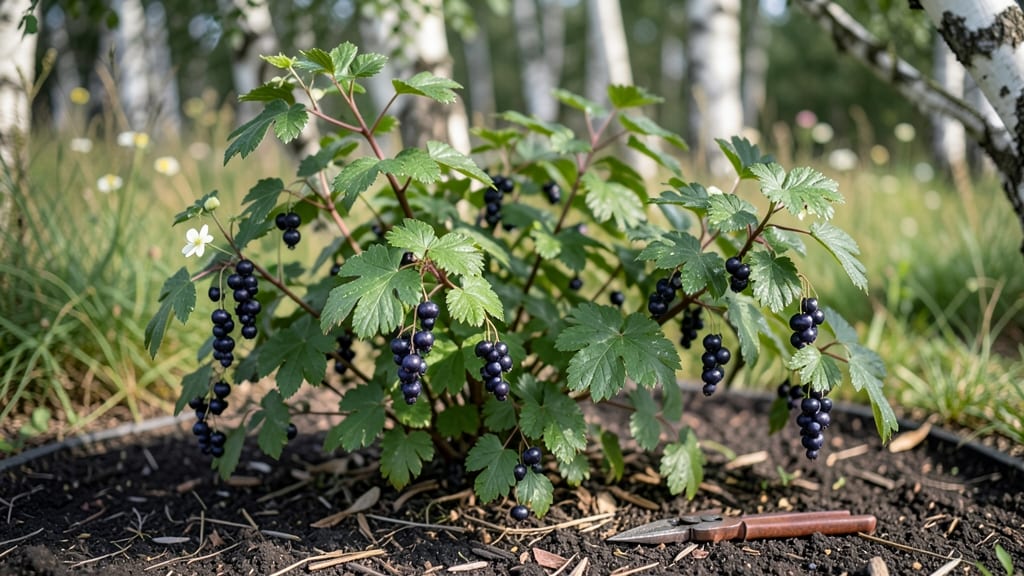
Growing a black currant tree in the Pacific Northwest means you’re working with a hardy, frost-loving plant that rewards patience with tart-sweet berries and lush foliage. I’ve pruned mine for five winters now, and the key is timing—late winter, when the tree’s dormant but the ground isn’t frozen solid.
The right cuts transform a tangled mess into a productive, sunlit canopy that produces berries year after year.
You’ll need sharp pruning shears, a sturdy ladder (for taller trees), and a clear day to work. Black currants thrive in moist, well-draining soil with 6-8 hours of sunlight daily, and they handle our region’s cold snaps better than most fruits.
The pruning process itself takes about 30-60 minutes depending on the tree’s size, and the payoff is berries that ripen in early summer—just in time for jam or fresh snacking.
What you’ll end up with is a tree that looks like a well-kept secret: glossy leaves, sturdy branches, and clusters of deep purple-black berries that birds won’t touch until you’re ready.
The pruning method I use keeps the tree open enough for airflow, which cuts down on fungal diseases like botrytis—something I learned the hard way after losing half my first harvest to mold.
Once you master the cuts, you’ll notice the tree’s growth habits shift: more fruit, fewer dead branches, and a shape that’s both practical and pretty.
This method works for both young trees and mature ones, though younger trees need lighter pruning to establish their structure. If you’re in a colder microclimate, like the Cascades foothills, you might delay pruning until early spring to avoid late frosts.
The goal is always the same: a tree that’s strong enough to handle our winters and productive enough to make the effort worthwhile. Let’s get those shears ready—your future berry harvest starts with a few clean cuts.
📚 In This Guide
- What you need
- Instructions
- Tips and common mistakes
- Wrapping up and next steps
What you need
- ● Pruning shears: Bypass pruners (sharp, clean, and sterilized with rubbing alcohol to prevent disease). Recommended: 6–8" blades for precision.
- ● Loppers: For thicker branches (1.5–2" diameter). Opt for bypass-style with long handles (24–30" for reach).
- ● Pruning saw: Curved-tooth saw for branches too thick for loppers (2–4" diameter). Pro tip: 💡 A folding saw saves space!
- ● Gloves: Heavy-duty, cut-resistant gloves (gardening or pruning-specific) to protect against thorns and sap.
- ● Disinfectant: 10% bleach solution (1 part bleach to 9 parts water) or 70% isopropyl alcohol for sterilizing tools between cuts.
- ● Rags or paper towels: For wiping tools and hands clean.
- ● Trash bags or compost bin: For removing pruned branches (avoid composting if diseased wood is present).
- ○ Ladder (optional but helpful): Sturdy, extendable ladder (12–16 ft) if your tree exceeds 8 ft tall. Safety first: Use non-slip feet and a spotter!
- ● Hand pruners: Compact, ergonomic shears for small branches (great for detail work).
- ● Sealing wax: Pruning sealant (like Tanglefoot Tree Wound Pruning Sealer) to coat large cuts (controversial but some swear by it!).
- ● Marking twine or flags: For tagging branches to prune later (useful for structured thinning).
- ● Work apron: With pockets to keep tools and gloves handy.
- ● Safety glasses: To shield eyes from debris (especially when using a saw).
- ● Timing: Prune dormant black currant trees in late winter/early spring (before buds swell) or summer (after harvest). Avoid pruning in fall to prevent disease.
- ● Weather check: Choose a dry, calm day (no rain forecasted for 24 hours). Wet conditions spread fungal spores!
- ● Tool sharpening: Hone your blades before starting—dull tools tear wood, inviting infection.
- ● Safety gear: Wear closed-toe shoes and long sleeves to avoid thorns and sap irritation.
Instructions for pruning a black currant tree in the Pacific Northwest
Here's the straightforward approach I use to keep my black currant thriving through frost and wet winters.
Time Your Pruning for Late Winter Dormancy
Prune your black currant tree in late winter—right after the worst frost but before buds swell. In the Pacific Northwest, this means February or early March. Pruning too early leaves cuts vulnerable to disease, while waiting too long risks removing next season's fruit buds.
Look for dormant branches with no leaves or green growth. These are safe to cut. If you see any green shoots starting, wait another week. I always check the forecast for a dry, calm day—wet conditions spread fungal diseases like reversion disease, which is deadly for black currants.
Remove Dead, Diseased, and Weak Wood First
Start by cutting out any dead, diseased, or crossing branches. Use clean, sharp pruners to make 45-degree cuts just outside the branch collar. Dead wood is easy to spot—it's brown, brittle, and doesn't bleed sap when cut. Diseased branches often have dark spots or mold.
Next, remove any branches that rub against others or grow inward. These create wounds where pests and diseases enter. Thin out crowded areas to improve airflow—black currants need good circulation to stay healthy. I aim to open up the center so sunlight reaches all branches.
Shape the Tree for Frost Resistance
Black currants handle frost better when they're low to the ground and well-spaced. Cut back older, overgrown branches to 12-18 inches from the ground. This encourages new growth from the base, which is more frost-resistant. Younger branches should be pruned to 6-12 inches to keep the tree compact.
Step back and visualize the tree as an open vase shape—wider at the top, narrower at the bottom. This shape lets snow slide off easily and reduces winter damage. Avoid heavy pruning on just one side, or the tree will lean. I like to leave 3-5 strong central branches as the main framework.
Thin Out Excessive Growth for Fruit Production
Black currants produce more berries when they're not overcrowded. Remove one-third of the oldest wood each year to encourage new, fruiting branches. Look for thin, weak stems—these rarely produce well and take energy from stronger branches. Cut them back to a healthy side branch.
Also, prune out suckers (shoots growing from the base or roots) unless you're propagating. Suckers drain energy from the main tree. After pruning, sterilize your tools with rubbing alcohol to prevent spreading disease between cuts.
Clean Up and Apply Mulch
Rake up all pruned branches and dispose of diseased wood immediately. Never compost diseased material—it can reinfect your garden. Then, spread 2-3 inches of organic mulch (like wood chips or straw) around the base, keeping it 6 inches away from the trunk to prevent rot.
Water deeply after pruning if the soil is dry. This helps the tree recover and encourages strong root growth. In the Pacific Northwest, where winters are wet, mulch helps regulate soil temperature and retain moisture. I also add a balanced fertilizer in early spring to support new growth.
Tips & tricks for pruning black currant trees
These practical tips will help you prune your black currant like a pro—especially in the Pacific Northwest's challenging climate.
Timing is Everything: In Step 1, when you're checking for dormant branches, don't rely solely on the calendar. Look for branches that are completely bare and feel dry to the touch. If you see any green shoots starting, wait another week—this is your clearest sign that buds are about to swell. I've learned the hard way that pruning too early can leave cuts vulnerable to fungal infections, especially in our wet winters.
Tool Maintenance Matters: Before you start cutting in Step 2, take 2 minutes to sharpen your pruners and sterilize them with rubbing alcohol. Dull blades tear wood instead of making clean cuts, which slows healing and invites disease. I keep a small bottle of alcohol in my gardening toolbox specifically for this purpose. Remember, the 45-degree angle cuts mentioned in the instructions work best with sharp tools—dull blades make it nearly impossible to achieve that precise angle.
Visualize the Vase Shape: When shaping your tree in Step 3, step back frequently to check your progress. The open vase shape isn't just about looks—it's about function. You want sunlight to reach all parts of the tree and snow to slide off easily. I find it helpful to imagine drawing an upside-down cone around the tree. All branches should fit comfortably within this invisible shape while still allowing good airflow. This prevents winter damage from snow accumulation and improves fruit production.
Mulch Application Technique: For Step 5, when applying your 2-3 inches of organic mulch, don't pile it directly against the trunk. Keep it 6 inches away to prevent rot and allow air circulation at the base. I use a rake to create a slight depression around the trunk before adding mulch, which helps water drain away from the stem. In our wet climate, this simple technique makes a big difference in preventing crown rot—a common problem with black currants.
Pro Tips for Black Currant Tree
- These practical tips will help you prune your black currant like a pro—especially in the Pacific Northwest's challenging climate.
- Timing is Everything: In Step 1, when you're checking for dormant branches, don't rely solely on the calendar.
- Tool Maintenance Matters: Before you start cutting in Step 2, take 2 minutes to sharpen your pruners and sterilize them with rubbing alcohol.
Frequently asked questions
Got questions about growing, maintaining, or maximizing your black currant tree? You’re not alone! Here are answers to the most common queries—from pruning basics to troubleshooting—so you can keep your tree thriving in the Pacific Northwest’s unique climate.
How do I know when to prune my black currant tree?
Prune your black currant tree in late winter or early spring (before buds swell but after the worst frosts). This timing ensures you remove dead wood while avoiding frost damage to fresh cuts. For PNW growers, aim for February to March—just before new growth kicks in. Skip summer pruning, as it can stress the tree and invite pests.
Can black currant trees survive heavy frost? How do I protect them?
Yes! Black currants are hardy to USDA Zones 3–8, making them frost-resistant. However, young trees or late frosts (<32°F) can damage buds. Protect them by:
- Mulching heavily (3–4 inches of organic mulch) to insulate roots.
- Using frost cloth or row covers for tender new growth.
- Avoiding winter pruning, which exposes fresh cuts to cold.
Why are my black currant leaves turning yellow or spotted?
Yellowing leaves often signal nutrient deficiencies (like iron or magnesium) or fungal diseases (e.g., anthracnose). Spots may mean powdery mildew or rust. Fix it by:
- Testing soil pH (black currants prefer 6.0–6.5; amend with sulfur if too alkaline).
- Pruning for airflow and removing infected leaves/debris.
- Applying neem oil or copper fungicide preventatively in spring.
How do I encourage bigger black currant harvests?
Boost yields with these pruning and care tips:
- Thin fruit clusters in early summer to 6–8 berries per stem (reduces competition, increases size).
- Prune to open the canopy: Remove crossing branches and suckers to improve sunlight penetration.
- Fertilize in early spring with a balanced 10-10-10 or compost—black currants are heavy feeders!
- Water deeply 1–2 times per week during dry spells (drought stress = smaller berries).
Are black currant trees self-pollinating? Do I need more than one?
Most black currant varieties are self-pollinating, but yields may double with a second tree nearby (even a different variety). For the PNW, popular pollinator-friendly picks include:
- Consort (disease-resistant, reliable producer)
- Ben Connan (large berries, cold-hardy)
- Black Down (compact, great for small spaces)
Wrapping up and next steps
Growing a thriving black currant tree in the Pacific Northwest is totally within reach—thanks to its natural frost resistance and the right pruning know-how! 🌿 By mastering the blueprint of selective thinning, winter shaping, and disease prevention, you’ll unlock lush harvests and a healthier plant year after year.
Don’t let hesitation hold you back—your future berry bounty is waiting!
Ready to take the next step? Grab your pruners, mark your calendar for late winter or early spring, and start small—even one branch trimmed correctly makes a difference. Happy pruning!