
Pruning
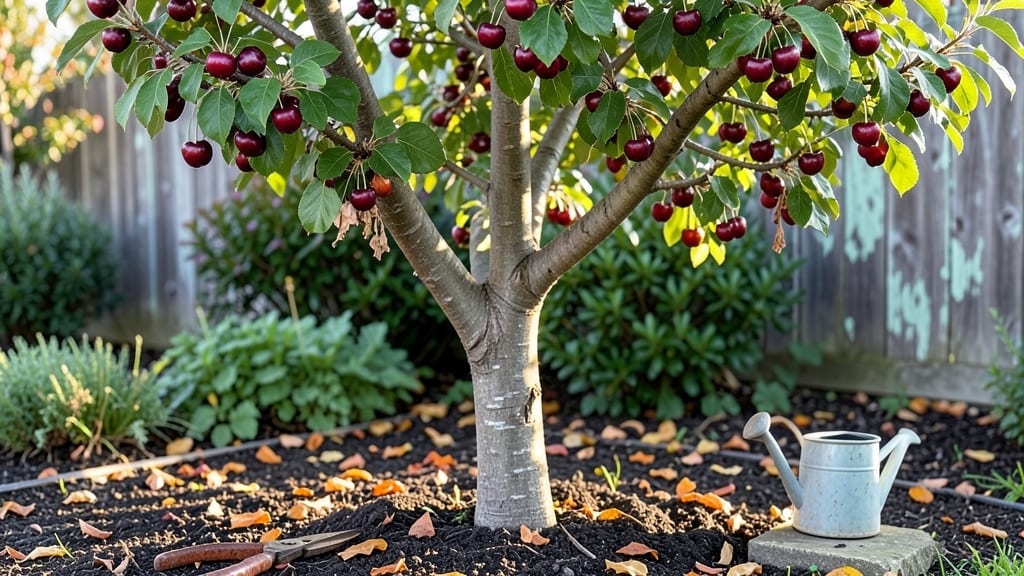
Planting a Bing sweet cherry tree in the Pacific Northwest isn't just about fruit—it's about capturing that perfect moment when the first deep-red cherries blush against the summer sky.
I learned the hard way that frost resistance isn't just about the variety; it's about where you plant it, how you prune it, and when you water it. The Bing's reputation for thriving in our cool, wet climate comes down to these small but critical choices.
You'll need a spot with full sun, well-draining soil, and protection from late frosts—think south-facing slopes or sheltered corners. The tree itself is surprisingly low-maintenance once established, but those first few years demand attention.
I've seen neglected Bing trees produce half the fruit of one that gets proper care, and the difference in flavor? Night and day. The secret lies in consistent watering during fruit set and a pruning schedule that opens the canopy to sunlight while keeping the structure strong.
By late July, you'll be harvesting cherries that burst with sweet-tart flavor, their juice staining your fingers as you pluck them straight from the tree. The payoff isn't just the harvest—it's the transformation of your yard into a late-summer oasis where kids (and neighbors) can't resist climbing the branches.
With the right approach, your Bing will outperform store-bought fruit in every way, from texture to taste to that unmistakable "I grew this myself" pride.
This works for urban backyards, rural orchards, or even large containers—though dwarf varieties are the key for smaller spaces. The techniques here adapt to your climate, your tools, and your time. Let's get that tree growing right, so you're not left with bitter cherries or empty branches by harvest time.
📚 In This Guide
- What you need
- Instructions
- Tips and common mistakes
- Wrapping up and next steps
What you need
- ● Pruning shears: Bypass pruners (sharp, 6–8" blades) for clean cuts on small branches.
- ● Loppers: Bypass or anvil type (20–24" handles) for thicker branches (up to 2" diameter).
- ● Pruning saw: Hand saw with curved blade for branches over 2" thick.
- ● Disinfectant: Rubbing alcohol (70%+) or pruning sealant to sterilize tools between cuts and prevent disease.
- ● Gloves: Heavy-duty gardening gloves (cut-resistant for protection).
- ● Ladder: Sturdy, extendable ladder (if tree exceeds 8–10 ft tall).
- ● Marking twine or flags: Colored twine or small stakes to tag branches for removal.
- ● Heavy-duty trash bags: 20–30 gallon size for collecting pruned branches.
- ● Pruning paint: Tree wound sealant (controversial but useful for large cuts > ½" diameter).
- ● Pole pruners: Extendable loppers (for high branches without a ladder).
- ● Work gloves with grip: Anti-slip or reinforced palms for better control.
- ● Camera or phone: To document the tree’s structure before/after pruning.
- ● First-aid kit: Bandages, antiseptic wipes (just in case!).
Step-by-step guide to planting a frost-resistant Bing sweet cherry tree
Here's how to establish a thriving Bing cherry tree that thrives in the Pacific Northwest's cool climate.
Choose the Right Location and Prepare the Soil
Select a sunny spot with at least 6-8 hours of direct sunlight daily. Bing cherries need full sun to ripen fruit properly, but they also appreciate some afternoon shade in hotter inland areas. Avoid low spots where cold air settles—cherry trees are frost-sensitive even when mature.
Test your soil's drainage by digging a hole and filling it with water. If it doesn't drain within 2-3 hours, amend with 2-3 inches of compost and a mix of sand or perlite to improve aeration. The ideal soil pH for Bing cherries is 6.0-6.5. If yours is too alkaline, work in sulfur or peat moss a few months before planting to adjust it gradually.
Plant at the Correct Depth and Stake for Support
Dig a hole twice as wide as the root ball but only as deep as the container's height. Gently remove the tree from its container and loosen any circling roots with your fingers. Place it in the hole so the top of the root ball sits 1-2 inches above ground level—this prevents water from pooling around the trunk and causing rot.
Backfill with native soil mixed with compost or well-rotted manure, tamping lightly as you go to eliminate air pockets. Install a 5-foot stake at a 45-degree angle, tying the tree trunk to it with a soft cloth or rubber strap. Water thoroughly after planting to settle the soil and encourage root contact.
Water Deeply and Mulch to Protect Roots
Give the tree 10-15 gallons of water immediately after planting, then repeat every 3-4 days for the first month. Young Bing cherries need consistent moisture to establish roots, but avoid waterlogging—the soil should feel damp 6 inches down but not soggy. Use a moisture meter or stick your finger in to check.
Spread 3-4 inches of organic mulch (wood chips or straw) around the base, keeping it 6 inches away from the trunk to prevent rot. Mulch helps regulate soil temperature and retain moisture, which is especially important during the Pacific Northwest's unpredictable spring rains and summer droughts. Replenish mulch annually as it breaks down.
Prune for Structure and Frost Protection
In late winter or early spring (before buds swell), prune to remove any dead, crossing, or inward-growing branches. Make cuts just outside the branch collar at a 45-degree angle. Open the center of the tree to improve air circulation, which reduces frost damage and fungal diseases common in dense canopies.
For young trees, aim for a vase-shaped structure with a strong central leader. In frost-prone areas, consider installing tree wraps or frost cloths during late spring blooms when flowers are most vulnerable. Water deeply before expected frosts—moist soil holds heat better than dry soil and can protect shallow roots.
Fertilize and Monitor for Common Issues
Apply a balanced 10-10-10 fertilizer in early spring, following package rates for young trees. Bing cherries are heavy feeders, but avoid over-fertilizing—too much nitrogen promotes leafy growth at the expense of fruit. In subsequent years, switch to a low-nitrogen, high-phosphorus formula (like 5-10-10) to encourage flowering.
Watch for signs of leaf curl virus (yellowing, curled leaves) or brown rot fungus (blackened fruit). Remove infected leaves immediately and sterilize pruners with rubbing alcohol between cuts. Pacific Northwest Bing trees often face bird predation—install netting over fruit when cherries begin to ripen to protect your harvest.
Tips & tricks for perfect Bing sweet cherry tree planting
Planting a frost-resistant Bing cherry tree in the Pacific Northwest takes a few key tricks to ensure success in our cool, wet climate.
Location is Everything: That 6-8 hours of sunlight is non-negotiable for Bing cherries to ripen properly, but I've learned the hard way that microclimates matter. If your yard has cold air pockets, plant on the south or southeast side of structures where walls can absorb and radiate heat. In coastal areas, afternoon shade helps prevent sunburn on leaves during our hotter summer days.
Soil Drainage Test: The 2-3 hour drainage test is critical—don't skip it! If water pools after 2 hours, mix in that 2-3 inches of compost plus sand/perlite to create proper aeration. I've seen many trees fail because owners assumed their soil drained fine. For alkaline soil, test your pH first—adjusting it months ahead with sulfur gives it time to fully integrate before planting.
Planting Depth Secret: That 1-2 inch elevation above ground level might seem minor, but it's what prevents rot from water pooling at the trunk. I've seen trees planted too deeply develop cankers where the trunk meets wet soil. After backfilling, gently press the soil around the roots to eliminate air pockets without compacting too much—think "firm but not dense."
Watering Wisdom: Those 10-15 gallons immediately after planting should soak the soil to a depth of 12 inches. I use a garden trowel to check—if it's dry at 6 inches after watering, keep going. The 3-4 day watering schedule assumes average summer weather; during our hot spells, you might need to water every 2 days instead. Mulch helps, but don't rely on it to replace proper watering.
Pro Tips for Bing Sweet Cherry Tree
- Planting a frost-resistant Bing cherry tree in the Pacific Northwest takes a few key tricks to ensure success in our cool, wet climate.
- Location is Everything: That 6-8 hours of sunlight is non-negotiable for Bing cherries to ripen properly, but I've learned the hard way that microclimates matter.
- Soil Drainage Test: The 2-3 hour drainage test is critical—don't skip it!
Frequently asked questions
How cold-hardy is the Bing cherry tree, really?
The Bing sweet cherry is one of the most frost-resistant varieties in the Pacific Northwest, tolerating temperatures down to -15°F (-26°C). However, late spring frosts (below 28°F/-2°C) can damage blossoms. Plant in a sheltered spot and avoid early pruning to protect buds. For extra safety, consider a row cover during critical bloom periods.
When should I prune my Bing cherry tree for best fruit production?
Prune your Bing cherry tree in late winter or early spring (before buds swell)—this is critical! Avoid summer pruning, as it can invite pests like brown rot. Focus on removing dead, crossing, or weak branches first, then thin out excess growth to improve airflow. Never prune after harvest, as new growth is vulnerable to winter damage.
Why aren’t my Bing cherries ripening evenly?
Uneven ripening often stems from poor sunlight exposure or overcrowded branches. Thin out dense foliage during pruning to ensure 6–8 hours of direct sun per day. If cherries ripen in patches, check for water stress (consistent moisture is key!) or nutrient deficiencies (test soil pH—ideal range is 6.0–6.5).
Can I prune a Bing cherry tree too aggressively?
Yes! Over-pruning can reduce next year’s harvest by removing too many fruiting spurs (those tiny side branches where cherries form). Aim to remove no more than 25% of the canopy per year. For mature trees, focus on structural shaping rather than drastic cuts. If you’ve already pruned too much, feed with compost and avoid heavy pruning for 1–2 seasons.
Are there dwarf Bing cherry tree alternatives for small spaces?
If space is limited, consider dwarf Bing cherry varieties like ‘Bing’ grafted onto Mazzard rootstock (grows 10–12 ft tall) or ‘Stella’ (a columnar Bing hybrid, reaching just 6–8 ft). For containers, ‘Montmorency’ (sour cherry) is a hardier (but tart) option. Just ensure full sun and well-draining soil—dwarf trees still need proper care!
Wrapping up and next steps
Growing a Bing sweet cherry tree in the Pacific Northwest is a rewarding journey—especially when you master pruning to boost fruit production and tree health! 🌱 With the right tools, timing, and techniques, you’ll enjoy bountiful harvests for years to come.
Whether you’re a beginner or a seasoned gardener, the key is patience and consistency.
Ready to take the next step? Start by observing your tree’s growth this season and jot down notes on pruning adjustments. Next spring, revisit your plan with confidence—your future cherry harvests will thank you! 🍒✨