
Pruning
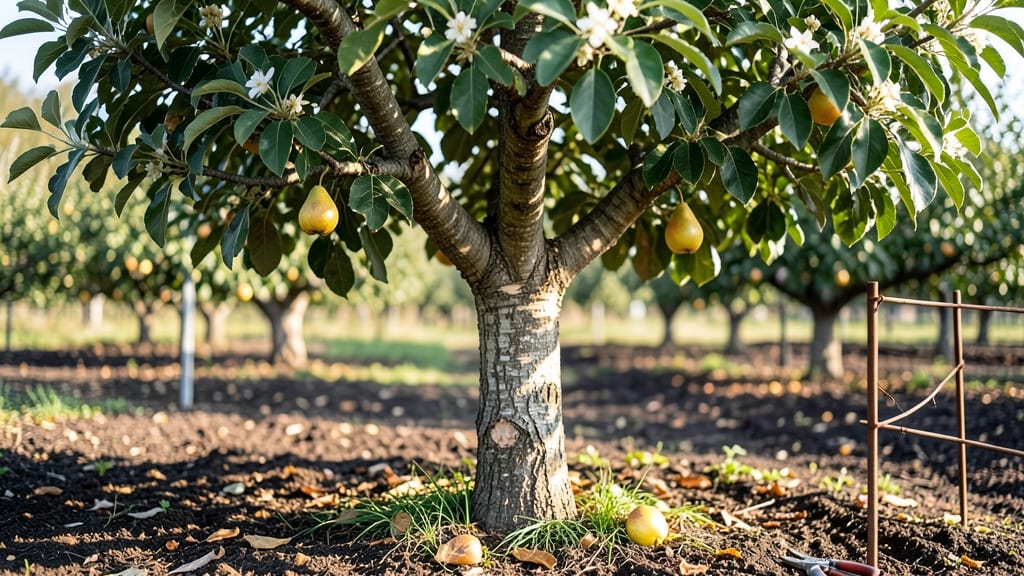
A Bartlett pear tree's mature size determines whether you'll be harvesting fruit or fighting branches. Standard varieties stretch 25–40 feet tall with a 20–30-foot spread, while dwarf versions top out at 12–16 feet—making them perfect for suburban yards.
I learned this the hard way when my first tree outgrew its spot, blocking the patio and shading the lawn.
The right spacing saves headaches later: plant standard trees 30–40 feet apart, while dwarf varieties need just 15–20 feet between them. Bartletts thrive in full sun (6+ hours daily) and well-drained soil with a pH of 6.0–7.5.
My dwarf tree now produces 50+ pears annually in a corner of the backyard where nothing else would fit.
Pruning young trees early keeps them manageable—focus on removing water sprouts and shaping the canopy to encourage airflow. Dwarf trees need less aggressive pruning but still benefit from annual thinning to prevent overcrowding. The payoff? A tree that fits your space without sacrificing fruit quality.
For small gardens, dwarf Bartletts like 'Patten' or 'Moonglow' are game-changers. They fruit faster (3–5 years vs. 7–10 for standards) and handle container growing if needed. Just avoid planting near driveways—their roots spread wider than their branches rise.
📚 In This Guide
- What you need
- Instructions
- Tips and common mistakes
- Wrapping up and next steps
What you need
- ● Bartlett pear tree: Dwarf variety (12–16 ft mature height, e.g., Bartlett ‘Dwarf’ or ‘Moonglow’)
- ● OR Standard variety (20–30 ft mature height, e.g., ‘Bartlett Standard’ or ‘Seckel’)
- ● Planting site: Well-draining soil (pH 6.0–7.0)
- ● Full sun (6+ hours/day)
- ● Space: Dwarf = 8–10 ft diameter; Standard = 15–20 ft diameter
- ● Tools: Shovel or trowel (for planting)
- ● Pruning shears (sharp, bypass-style)
- ● Loppers (for thicker branches)
- ● Grafting tape (if grafting scions)
- ● Mulch (2–3 inches of organic matter, e.g., wood chips)
- ● Tree stakes & ties (for young/saplings)
- ● Fertilizer (balanced 10-10-10 or organic compost)
- ● Drip irrigation system (for consistent watering)
- ● Tree guard or wire cage (to protect from pests)
- ● Growth regulator (if controlling dwarf tree height)
Understanding Bartlett pear tree size: how to choose the right variety for your space
Selecting the perfect Bartlett pear tree starts with knowing how much space it will need to thrive.
Measure Your Available Space and Soil Conditions
Begin by assessing the area where you plan to plant your Bartlett pear tree. Standard varieties can reach 20-30 feet tall with a spread of 15-25 feet, making them unsuitable for most small gardens or urban yards. Measure the width and length of your planting zone, including overhead clearance for branches.
Next, evaluate your soil's drainage and fertility. Bartlett pears prefer well-draining soil with a pH between 6.0 and 7.5. Conduct a simple soil test using a home kit to check moisture retention and nutrient levels. Compacted or waterlogged soil will stunt root growth, while poor fertility can lead to weak, disease-prone trees.
Compare Dwarf, Semi-Dwarf, and Standard Bartlett Varieties
Dwarf Bartlett pear trees top out at 8-12 feet tall with a spread of 6-10 feet, making them ideal for small gardens, patios, or even large containers. Semi-dwarf varieties grow 12-16 feet tall and 10-14 feet wide, striking a balance between manageability and fruit production. Standard trees, as mentioned, are best suited for rural properties with ample space.
Consider the rootstock used in dwarf varieties—common options include OhxF 87 or Quince A, which influence both size and cold hardiness. Dwarf trees may require staking for the first few years, while semi-dwarfs offer a middle ground in terms of both space and maintenance.
Plan for Mature Height and Spread
Visualize the tree’s mature dimensions in your space. A dwarf Bartlett in a 10-foot by 10-foot plot will need at least 3-5 feet of clearance on all sides to avoid overcrowding. Use stakes and twine to mark the planting area, ensuring the tree has room to develop its root system without competing with nearby structures or plants.
For semi-dwarf trees, allocate 12-15 feet of clearance in all directions. Standard varieties require 20+ feet of space, including overhead clearance for branches. If planting near a fence or wall, leave 6-8 feet of clearance to prevent root damage and ensure proper airflow.
Adjust Pruning and Training for Space Constraints
Prune young Bartlett trees annually to encourage a strong, open canopy. For dwarf varieties, focus on central leader training—removing competing branches to maintain a single upright trunk. This method keeps the tree compact and improves fruit accessibility.
Use spreading or modified leader training for semi-dwarf trees to create a wider, lower canopy. Prune in late winter or early spring before new growth begins, removing water sprouts, dead wood, and crossing branches. Avoid heavy pruning in summer, as it can stimulate excessive new growth that may not harden off before frost.
Monitor Growth and Adjust Care as Needed
Track the tree’s growth annually by measuring height and spread. Dwarf trees should gain 1-2 feet per year, while semi-dwarfs grow 2-3 feet annually. If growth slows or branches become overcrowded, prune selectively to maintain the desired shape and size.
Adjust watering and fertilization based on the tree’s size. Mature dwarf trees need 10-15 gallons of water per week during dry spells, while larger varieties may require 20-30 gallons. Use a slow-release fertilizer in early spring to support steady growth without overstimulating foliage at the expense of fruit production.
Tips & tricks for perfect Bartlett pear tree selection
Choosing the right Bartlett pear tree size can make all the difference in your garden's success—here's how to avoid common pitfalls and maximize your space.
Rootstock Matters: The rootstock you choose determines your tree's final size. For dwarf varieties, OhxF 87 rootstock produces trees that stay compact (8-12 feet tall), while Quince A rootstock creates slightly larger dwarfs (up to 10 feet tall). Semi-dwarf trees use different rootstocks like MM 111 or Brompton, which grow to 12-16 feet. Always check the rootstock information when purchasing—this is the single most important factor in controlling your tree's size.
Visualize Mature Dimensions: I can't stress this enough—draw a simple sketch of your planting area showing the tree's mature height and spread. For a dwarf Bartlett in a 10-foot plot, leave 3-5 feet of clearance on all sides. This prevents overcrowding and ensures proper airflow, which is crucial for preventing fungal diseases. Remember that branches will extend beyond the trunk's diameter, so account for that extra space when planning.
Soil Preparation Tip: Before planting, amend your soil with 2-3 inches of compost mixed into the top 12 inches of soil. Bartlett pears thrive in well-draining soil with a pH between 6.0 and 7.5. If your soil test shows poor drainage, consider planting on a slight mound to prevent waterlogging. The root system needs room to breathe—compacted soil will stunt growth and reduce fruit production.
Pruning Strategy: When pruning dwarf varieties, focus on central leader training to maintain that single upright trunk. For semi-dwarfs, use spreading or modified leader training to create a wider, lower canopy. I recommend pruning in late winter or early spring before new growth begins—this timing allows the tree to heal properly before summer's heat. Never remove more than 25% of the canopy in one season, as this can stress the tree.
Pro Tips for Bartlett Pear Tree Size
- Choosing the right Bartlett pear tree size can make all the difference in your garden's success—here's how to avoid common pitfalls and maximize your space.
- Rootstock Matters: The rootstock you choose determines your tree's final size.
- Visualize Mature Dimensions: I can't stress this enough—draw a simple sketch of your planting area showing the tree's mature height and spread.
Frequently asked questions
Got questions about your Bartlett pear tree’s size? You’re not alone!
Here are answers to the most common queries—whether you’re planning for a small garden or troubleshooting growth issues.
How big does a mature Bartlett pear tree typically grow?
A standard Bartlett pear tree can reach 20–30 feet tall with a spread of 15–25 feet. Dwarf varieties, however, stay compact at 8–12 feet tall and 6–10 feet wide—perfect for small gardens or containers! Always check the specific cultivar’s tag for exact expectations.
How long does it take for a Bartlett pear tree to bear fruit?
With proper care, a Bartlett pear tree can produce fruit in 3–5 years for standard varieties and 2–3 years for dwarf types. Patience is key—young trees focus on root and branch growth first. Pro tip: Plant two trees (or a pollinator) to ensure cross-pollination and better yields!
Can a Bartlett pear tree grow in a pot, or does it need ground planting?
Dwarf Bartlett pears thrive in large pots (at least 15–20 gallons) with drainage holes, but standard varieties need ground planting. Use well-draining soil and repot every 2–3 years to accommodate root growth. Warning: Containers dry out faster—water consistently!
How do I prune a Bartlett pear tree to control its size?
Prune in late winter or early spring before buds swell. Remove 1/3 of last year’s growth to encourage bushiness, and thin out crowded branches. For dwarf trees, limit pruning to 10–15% of the canopy annually. Safety first: Sterilize tools with rubbing alcohol to prevent disease!
Why isn’t my Bartlett pear tree growing as expected?
Stunted growth often stems from poor soil, lack of sunlight, or pests. Check for aphids or borers (common culprits) and amend soil with compost. Ensure 6+ hours of sunlight daily and water deeply 1–2 times per week during dry spells. If issues persist, test soil pH (ideal: 6.0–7.0).
Wrapping up and next steps
Choosing the right Bartlett pear tree size for your small garden can make all the difference! Whether you opt for a dwarf (compact and manageable) or a semi-dwarf (balanced growth), you’re setting yourself up for years of delicious harvests with minimal space.
Remember, proper pruning and care will keep your tree thriving—so roll up your sleeves and get ready to enjoy the fruits of your labor! 🍐✨
Now that you’re armed with the knowledge, why not take the next step? Sketch a quick layout of your garden, mark where your new pear tree will go, and start planning its care routine. Happy planting!