
Fertilization
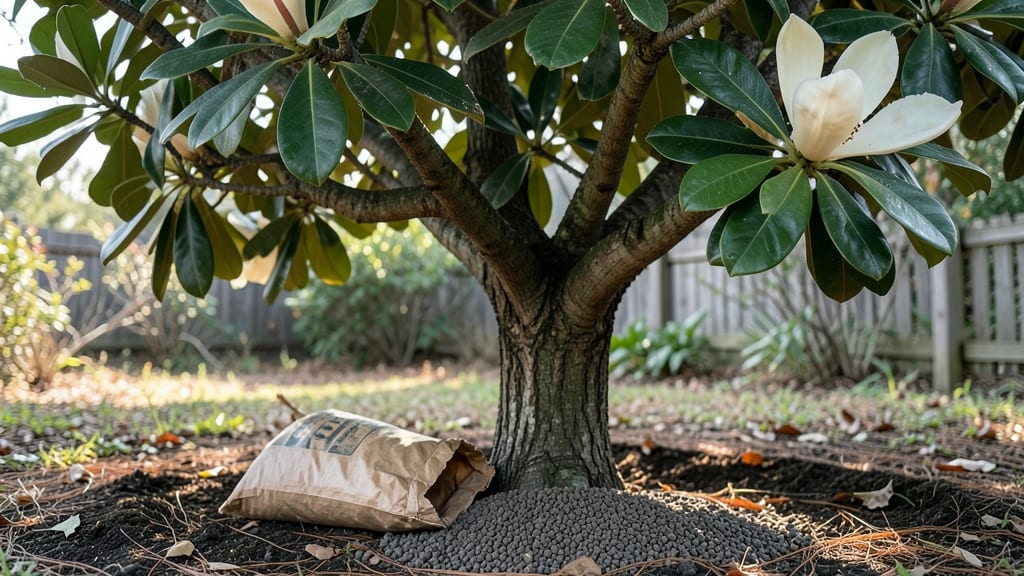
A 10-10-10 fertilizer for magnolia trees is the secret weapon behind my neighbor’s showstopping blooms—creamy white petals that perfume the air in May. Magnolias thrive on balance, and this equal-parts nitrogen, phosphorus, potassium blend delivers exactly that without overwhelming their delicate roots.
The key isn’t just dumping it near the trunk, though—it’s about timing, soil prep, and knowing when to step back.
Here’s the thing: magnolias hate being babied. Too much fertilizer burns their roots, leaving brown patches where fragrant blooms should be. I learned that the hard way after my first overzealous spring feeding.
Instead, we’re talking light doses—about ½ pound per inch of trunk diameter—applied in early spring and again after blooms fade. Spread it evenly in a 2-foot-wide ring, then water it in like you’re waking up a sleepy giant.
By fall, you’ll notice new growth where there were bare branches, and next spring’s buds will be bigger and brighter. The fertilizer works its magic slowly, feeding the roots without shocking the system.
Just watch for yellow leaves—that’s your cue to cut back. For organic lovers, composted manure or a slow-release granular blend works too, though the results take a little longer to show.
This method works for both young saplings and mature trees, whether you’re in the humid South or a milder climate. The goal is steady growth, not a sudden growth spurt that leaves your magnolia gasping. Let’s get those roots fed right—for blooms that’ll make your whole block jealous.
📚 In This Guide
- What you need
- Instructions
- Tips and common mistakes
- Wrapping up and next steps
What you need
- ● 10-10-10 granular or slow-release fertilizer – 1 to 2 pounds per 100 square feet of root zone area (check your magnolia’s mature size for accuracy).
- ● Garden gloves – To protect your hands from fertilizer and soil debris.
- ● Watering can or hose with a gentle spray nozzle – For even distribution and hydration.
- ● Measuring scoop or scale – To ensure precise fertilizer quantities (avoid over- or under-applying!).
- ○ Pruning shears (optional but helpful) – For trimming dead or overgrown branches before fertilizing.
- ● Broadcast spreader – For even distribution (especially useful for larger trees).
- ● Soil pH test kit – Magnolias prefer slightly acidic soil (pH 5.0–6.5); adjust if needed before fertilizing.
- ● Organic mulch (pine bark or compost) – 2–4 inches to retain moisture and regulate soil temperature.
- ● Rain gauge or weather forecast – To avoid fertilizing before heavy rain (which can wash nutrients away).
- ● Knee pads or a small stool – For comfort when working near the base of the tree.
Step-by-Step guide to feeding your magnolia tree with 10-10-10 fertilizer
Here’s how I’ve learned to feed my magnolia trees for vibrant blooms and steady growth—without overdoing it.
Test Soil Before Applying Fertilizer
Magnolias thrive in slightly acidic soil with a pH between 5.5 and 6.5. Grab a soil test kit from your local garden center and follow the instructions to collect samples from 3-4 spots around the tree, about 6 inches deep. This ensures you’re not missing localized nutrient deficiencies or pH swings.
If the test shows a pH outside the ideal range, adjust it before fertilizing. For acidic soil, add sulfur or peat moss; for alkaline soil, use elemental sulfur or pine needles. Once the pH is right, you’re ready to feed. I always test in early spring—right when the buds start swelling—so I can time my fertilizer application perfectly.
Apply 10-10-10 Fertilizer at the Right Time
Spread ½ cup of 10-10-10 fertilizer per inch of trunk diameter around the drip line of the tree—that’s the area where branches naturally extend. For a 4-inch diameter trunk, that’s about 2 cups total. Work the granules into the top 2-3 inches of soil using a rake or hoe, keeping them 6-12 inches away from the trunk to avoid root burn.
Water the area deeply after applying to help the granules dissolve and reach the roots. I like to do this in early spring, just as new growth begins, and again in late spring if the tree looks hungry. Avoid fertilizing in summer or fall—magnolias go dormant in cooler months, and feeding then can stress the tree or encourage weak, late-season growth that won’t survive winter.
Water and Monitor for Signs of Thirst or Overfeeding
After fertilizing, water the tree thoroughly—aim for 1-2 inches of water per week, either from rainfall or irrigation. Check the soil 2 inches down with your finger; if it feels dry, water again. Overwatering can leach nutrients away, while underwatering can leave fertilizer salts concentrated around the roots, causing damage.
Watch for these signs: dark green, glossy leaves mean the tree is happy and well-fed. If you see yellowing leaves, it could mean overwatering or too much fertilizer. Brown leaf edges often signal underwatering or salt buildup. If you notice either, flush the soil with extra water to dilute excess salts and hold off on fertilizing for 3-4 months to let the tree recover.
Mulch to Retain Moisture and Nutrients
Spread a 2-3 inch layer of organic mulch, like pine straw or shredded bark, over the root zone but keep it 6 inches away from the trunk. This helps retain moisture, regulates soil temperature, and slowly releases nutrients as it breaks down. I reapply mulch in late winter to protect the tree’s roots during cold snaps.
Mulch also prevents weeds from competing with your magnolia for nutrients. Just avoid piling mulch too high—too much can suffocate roots and trap moisture, leading to rot. A thin, even layer is all you need. This step is simple but makes a huge difference in keeping your tree healthy between feedings.
Adjust Based on Tree Maturity and Bloom Performance
Young magnolias (under 5 years old) need less fertilizer—just ¼ cup of 10-10-10 per year, applied in early spring. Mature trees (over 10 years old) can handle the full dose, but if your tree isn’t blooming as much as you’d like, it might need a light boost in late winter with a low-nitrogen fertilizer (like 5-10-10) to encourage flowering.
If your magnolia is dropping buds before they open, it’s often a sign of too much nitrogen or stress from improper watering. Cut back on fertilizer and focus on consistent moisture and even sunlight. I’ve found that magnolias respond best to gentle, consistent care—they’re dramatic trees, but they reward patience with stunning blooms year after year.
Tips & tricks for feeding your magnolia tree with 10-10-10 fertilizer
Here's what I've learned after years of nurturing magnolias—little details that make all the difference between a struggling tree and one that thrives.
Soil Testing Timing: I can't emphasize enough how critical Step 1 is—don't skip the soil test! The ideal pH range of 5.5-6.5 isn't just a suggestion. Test your soil in early spring when buds start swelling, as this gives you time to adjust before applying fertilizer. I've seen trees with perfect fertilizer applications fail because the soil pH was completely wrong. Grab that test kit and make it your first step every year.
Fertilizer Application Precision: When applying that ½ cup per inch of trunk diameter in Step 2, spread the granules evenly around the drip line—not just in one spot. I measure my tree's trunk diameter at chest height, then calculate the fertilizer amount precisely. For my 4-inch trunk, that's exactly 2 cups total. Working the granules into the top 2-3 inches of soil is key—they need to be close to the roots but not touching the trunk to prevent burn.
Seasonal Timing Matters: The early spring timing in Step 2 is non-negotiable for me. I've tried fertilizing in summer and fall, and while it doesn't kill the tree, it definitely stresses it. Magnolias go dormant in cooler months, and feeding then can cause weak growth that won't survive winter. Think of it as feeding your tree when it's actively growing—just like you wouldn't expect a human to perform well on an empty stomach during winter hibernation.
Mulch Layering Technique: For the mulch in Step 4, I always aim for that 2-3 inch layer but keep it 6 inches away from the trunk. The secret is to spread it evenly—don't pile it up in one area. I use pine straw because it breaks down slowly and maintains that perfect moisture level. Reapplying in late winter gives me peace of mind that the roots will stay protected during cold snaps, which is especially important in my climate where winters can be harsh.
Pro Tips for 10-10-10 Fertilizer For Magnolia Tree
- Here's what I've learned after years of nurturing magnolias—little details that make all the difference between a struggling tree and one that thrives.
- Soil Testing Timing: I can't emphasize enough how critical Step 1 is—don't skip the soil test!
- Fertilizer Application Precision: When applying that ½ cup per inch of trunk diameter in Step 2, spread the granules evenly around the drip line—not just in one spot.
Frequently asked questions
Got questions about using 10-10-10 fertilizer for your magnolia tree?
You’re not alone! Here are some of the most common concerns—plus straightforward answers to help you nurture a thriving, blooming magnolia with confidence.
When is the best time to apply 10-10-10 fertilizer to a magnolia tree?
The ideal times are early spring (before buds swell) and late summer (after blooming). Avoid fertilizing in fall or winter, as magnolias are dormant and won’t benefit. For young trees, split the dose into two light applications to prevent root burn.
Can I use 10-10-10 fertilizer too often? What are the signs of over-fertilizing?
Overdoing it can harm your magnolia. Signs include yellowing leaves, leaf drop, or stunted growth. Stick to the recommended schedule (2–3 times per year) and always water thoroughly after application to help nutrients absorb safely. If you suspect over-fertilization, flush the soil with water and hold off on feeding for a month.
Is 10-10-10 fertilizer safe for all magnolia varieties, like Southern or Star magnolias?
Yes, but adjust the amount based on tree size and age. Mature magnolias (10+ years) can handle up to ½ pound per inch of trunk diameter, while younger trees need less. For acid-loving varieties (like Southern magnolias), consider amending the soil with sulfur or peat moss to complement the fertilizer.
What’s a good alternative if I don’t have 10-10-10 fertilizer?
Look for a balanced, slow-release granular fertilizer with similar NPK ratios (e.g., 8-8-8 or 12-12-12). Organic options like composted manure or fish emulsion also work but may require more frequent applications. Always check the label for magnolia compatibility!
Why did my magnolia’s leaves turn brown after applying 10-10-10?
Brown leaves often signal fertilizer burn or salt buildup from excess salts in the soil. To fix it:
- Water deeply to leach out excess salts.
- Avoid fertilizing for 4–6 weeks.
- Use a chelated iron supplement if leaves appear yellow between veins (chlorosis).
Wrapping up and next steps
Using 10-10-10 fertilizer for your magnolia tree is a simple yet effective way to fuel its growth and encourage stunning blooms! 🌸 With the right balance of nitrogen, phosphorus, and potassium, you’re giving your tree the precision nutrition it needs to thrive.
Just remember to apply it at the right time—early spring or fall—and follow the recommended dosage for best results.
Now that you’re armed with the knowledge, it’s time to roll up your sleeves! Monitor your tree’s progress and adjust care as needed. Happy gardening—your magnolia will thank you with vibrant foliage and breathtaking flowers! 🌿✨